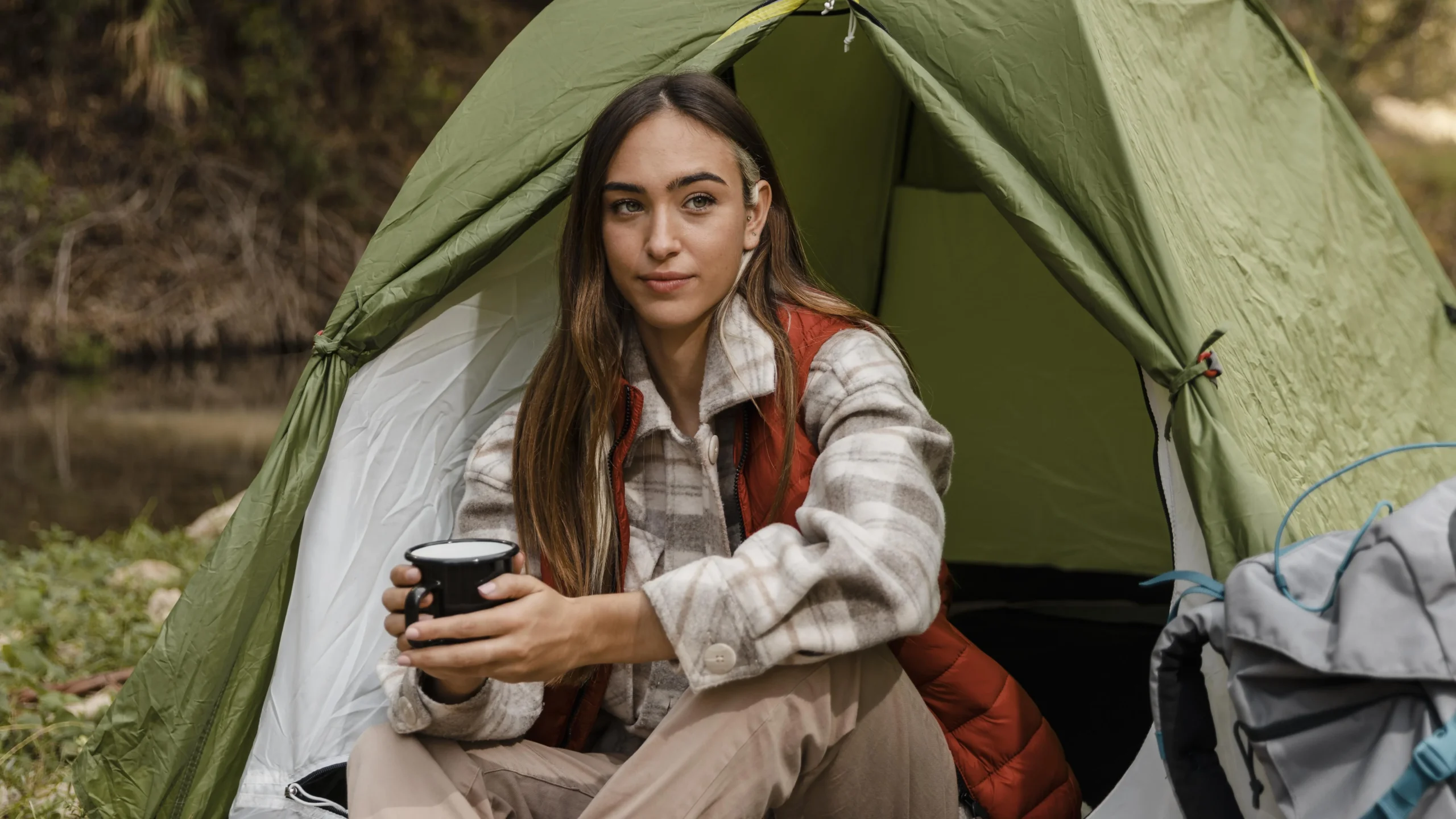
Camping is the one trip where your outfit actually has a job to do. It’s not enough for it to look good in the photo by the tent – it has to survive a hike to the site, a cold morning, a hot afternoon, and a campfire that puts sparks within a few feet of whatever you’re wearing. The best camping outfits for women understand that job description before they think about anything else, which is exactly why they end up looking better than the outfits that were only trying to look good in the first place.
Our Favorite Camping Outfits for Women
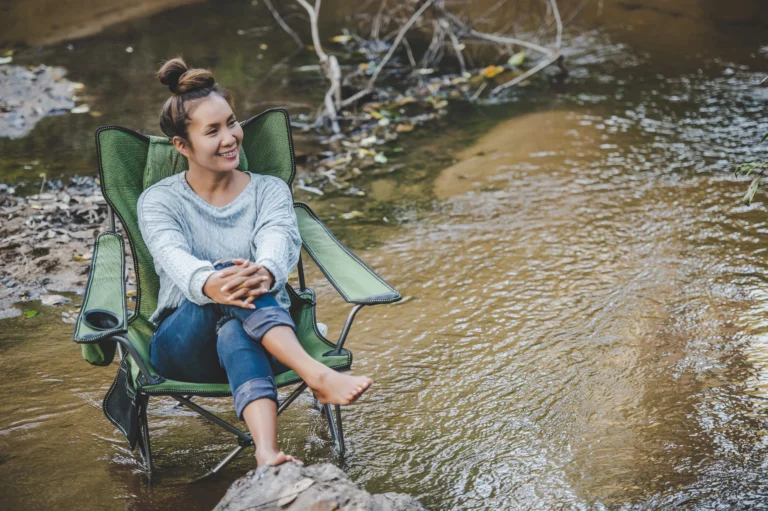
The Forest Green Oversized Sweatshirt & Light Wash Denim Shorts
Forest green oversized sweatshirt, light wash denim shorts. A forest green oversized sweatshirt with light wash denim shorts is the camping combination that gets the color palette right without even trying – forest green practically disappears into a wooded campsite in the best way, and the oversized fit means it’s roomy enough to layer a base underneath on a cold morning. Denim shorts keep the bottom half breathable for a warm afternoon, though they’re better suited to a relaxed camp day than an actual hike, since denim doesn’t dry quickly if it gets wet. This is the outfit for setting up camp, sitting by the fire, and looking like you belong in the woods.
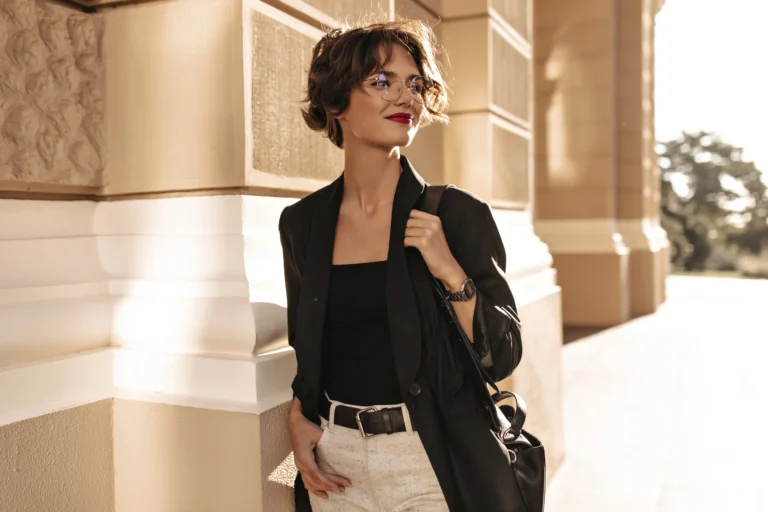
The Beige Overshirt & Brown Cargo Pants
Beige overshirt, brown cargo pants. A beige overshirt with brown cargo pants is the most functional camping combination in this collection – the overshirt layers easily over a tee and comes off just as easily once the sun’s up, and cargo pants bring actual utility with pockets deep enough for a map, a lighter, or your phone without needing a bag. Both pieces sit in the warm neutral palette that reads outdoorsy without looking like a costume. This is the combination for the person who wants to actually use their pockets, not just look the part.
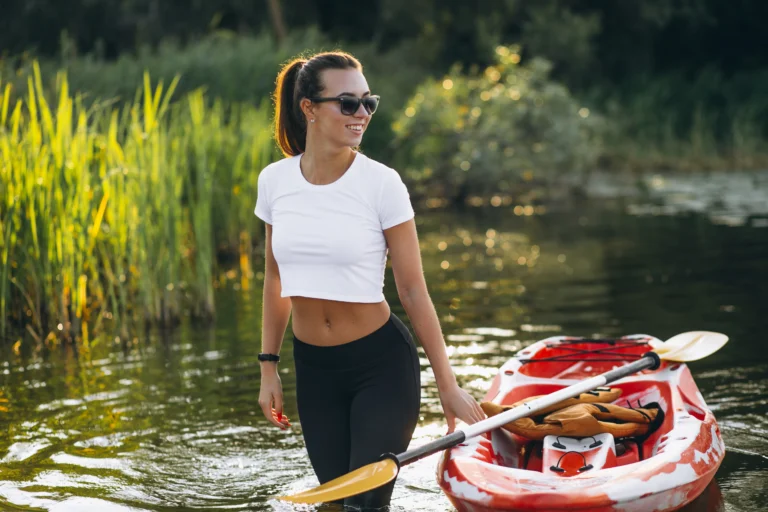
The White Fitted Tee & Black Biker Shorts
White fitted tee, black biker shorts. A white fitted tee with black biker shorts is the camping combination built for warm weather and real movement – biker shorts stay put through a hike or a scramble over rocks in a way loose shorts don’t, and the fitted tee means nothing is flapping or catching on branches along the trail. This is the simplest, most stripped-down outfit in the collection, and that’s the point: on the hottest camping days, less fabric and a closer fit are the actual functional choice, not just the stylish one.
The Brown Plaid Flannel Shirt & Black Hiking Leggings
Brown plaid flannel shirt, black hiking leggings. A brown plaid flannel shirt with black hiking leggings is the classic camping combination for a reason – flannel is a genuinely warm, durable fabric that layers over a base tee and shrugs off sparks and scrapes better than a thin sweatshirt. Black hiking leggings underneath move with you on the trail and dry faster than denim if you get caught in a light rain. Plaid is the pattern that belongs at a campsite more than almost anywhere else, practical and photogenic at the same time. This is the outfit for the actual hike, not just the campsite lounging.
The Oversized Olive Green Tee & Olive Biker Shorts
Oversized olive green tee, olive biker shorts. An oversized olive tee with matching olive biker shorts is the camping combination that goes fully tonal, and it works because olive is a color that was basically made for the outdoors. The oversized tee gives room to move and stays cool in the heat, while the biker shorts underneath keep everything secure for a hike or a scramble down to the water. Matching tones head to toe makes packing simple – one color, no coordinating required – and it photographs beautifully against a green or brown backdrop.
The White Oversized Tee & Black Hiking Shorts
White oversized tee, black hiking shorts. A white oversized tee with black hiking shorts is the camping combination with the most contrast and the least fuss – white reflects heat better than a dark color on a sunny trail, and the oversized fit keeps air moving instead of trapping it against your skin. Hiking shorts built with actual performance fabric and pockets are the better choice here over basic cotton shorts, since they dry faster and hold up to brush and rock scrambles. This is the outfit for the hottest day of the trip, simple enough that you won’t think about it once.
The Cream Oversized Sweatshirt & Black Leggings
Cream oversized sweatshirt, black leggings. A cream oversized sweatshirt with black leggings is the camping combination for the cold morning or the chilly night by the fire – the sweatshirt is roomy enough to layer a long sleeve underneath if the temperature really drops, and cream is a lighter neutral that still hides a little campfire smoke and dust better than pure white. Black leggings are the reliable base layer that works under everything else in your camping bag. This is the outfit for waking up before the sun’s fully up and wanting to stay warm without digging through your whole pack.
The Rose Pink Fleece Pullover & Blush Jogger Pants
Rose pink fleece pullover, blush jogger pants. A rose pink fleece pullover with blush jogger pants is the camping combination that proves warmth doesn’t have to mean drab colors – fleece is one of the best fabrics for a cold campsite evening, since it insulates without holding onto dampness the way cotton does, and this soft pink tone is a genuine departure from the expected greens and browns. Blush joggers underneath keep the whole combination soft and coordinated, and joggers in general are one of the most practical camping bottoms since they taper at the ankle and stay out of the way near a fire. This is the outfit for the evening around the campsite once the hiking’s done for the day.
The Taupe Tank Top & Black Hiking Shorts
Taupe tank top, black hiking shorts. A taupe tank top with black hiking shorts is the camping combination for the warmest part of the day – the tank keeps you cool with nothing extra to layer or push up, and taupe is a warm, dusty neutral that hides trail dirt far better than a bright color would. Black hiking shorts are built for actual movement, with the pockets and quick-dry fabric that basic cotton shorts don’t have. This is the base layer combination worth packing no matter what else you bring, since it works under a flannel, an overshirt, or a sweatshirt the moment the temperature drops.
My Best Tips for Camping Outfits
How to dress for a trip that swings from cold morning to hot afternoon to cold night again – the fabrics, the layers, and the pieces actually worth packing.
A camping outfit has to do more than most clothes ever get asked to do – it has to move, insulate, dry fast, and survive close proximity to a fire, sometimes all in the same afternoon. The best camping wardrobes are built around a small rotation of layers that mix and match easily. Here is the framework.
The Camping Palette
Colors that work with the outdoors instead of against it:
- → Forest green and olive – the two colors that blend most naturally into a wooded campsite, and both function like neutrals within a camping wardrobe.
- → Beige, taupe, and brown – the earth tones that hide trail dirt and campfire smoke far better than brighter colors, useful for a multi-day trip with limited laundry options.
- → Cream and white – the best choice for the hottest part of the day, since lighter colors reflect heat instead of absorbing it.
- → Black – the most practical base layer color, especially for leggings and shorts worn under other pieces.
- → Rose and blush – a soft departure from the expected earth tones, easy to bring in through a fleece layer for evenings without clashing with anything else.
- → What to skip: anything you’d be upset to get dirty. A campsite will find every white sneaker and every light-colored pant eventually.
Your Three Camping Outfit Formulas
Three combinations that cover the full range of a camping day:
The Trail Hike
A flannel or overshirt layered over a base tee + hiking leggings or shorts with real pockets. Built to move, breathe, and dry fast if the weather turns.
The Campsite Lounge
An oversized sweatshirt + denim shorts or leggings. The combination for setting up camp, cooking, and hanging around before or after the hike.
The Fireside Evening
A fleece pullover + jogger pants. Warm without holding onto dampness, and tapered enough at the ankle to stay clear of the fire.
The Camping Bottom
What you wear on your legs matters as much as what’s on top, depending on what the day actually involves:
- → Hiking leggings and shorts – built with performance fabric that moves with you and dries fast. The right choice for the actual trail.
- → Cargo pants – the most functional choice when you need real pockets and don’t want to carry a bag on a shorter walk.
- → Biker shorts – the best option for a hot day with real movement, staying put on a scramble or a swim without riding up.
- → Denim shorts – fine for lounging around the campsite, but the wrong choice for an actual hike since denim doesn’t dry quickly if it gets wet.
The Camping Fabrics
Fabric decides whether an outfit actually holds up outdoors, more than any other single factor:
- → Fleece – the best warmth-to-weight fabric for a camping trip. It insulates even when slightly damp, unlike cotton, which is a major reason it belongs in the evening rotation.
- → Flannel – warm and genuinely durable, standing up to brush, sparks, and general wear better than a lighter sweatshirt fabric.
- → Moisture-wicking synthetics – essential for anything worn directly against the skin on a hike, especially hiking shorts and leggings.
- → Cotton sweatshirt fleece – soft and warm for a cold morning at the campsite, best saved for lounging rather than an active hike since it holds onto moisture.
The Layer System – Camping’s Most Important Piece
No single item matters more on a camping trip than having the right layers ready to add or remove:
- → A good camping layer comes off in one motion – a flannel, an overshirt, or a zip fleece you can shed the second you warm up on the trail.
- → The outer layer should be the piece you plan to take off first, not the last, since a camping day almost always warms up more than expected.
- → A tank top or fitted tee underneath every outer layer means you’re never stuck once that layer comes off.
- → Pack one true warm layer, a fleece or flannel, even on a trip that looks warm on paper. Campsite nights run colder than you expect.
What a Good Camping Outfit Is Not
A few boundaries worth knowing before you pack:
- → Not about a single outfit for the whole trip – a camping day usually needs at least two versions, one for the active hours and one for sitting around the fire.
- → Not about all-cotton – cotton feels comfortable standing still and turns cold and slow to dry the moment it’s wet, which is a real problem outdoors.
- → Not about pieces you’re precious about – dirt, smoke, and scrapes are part of the trip. Pack things you won’t mind getting genuinely used.
- → Not about matching perfectly – practicality outranks coordination here. A tonal outfit is nice, but a working layer system matters more.
Building the Camping Wardrobe
The specific pieces that generate every combination in this collection:
- → 1 oversized sweatshirt in forest green or cream
- → 1 plaid flannel shirt and 1 beige overshirt for hiking layers
- → 1 fleece pullover in a soft color like rose or blush
- → A few fitted or oversized tees and tanks in white, olive, and taupe as base layers
- → 1 pair hiking leggings and 1 pair hiking shorts in black
- → 1 pair biker shorts and 1 pair denim shorts
- → 1 pair cargo pants for utility and pockets
- → 1 pair jogger pants in blush for the evening around the fire
- → From those pieces: every combination in this collection, and a camping wardrobe ready for whatever the trail and the weather do.
The cheat code: A plaid flannel shirt layered over a fitted tee with hiking leggings is the camping outfit that handles the most hours of your trip without a single change. The flannel comes off the second the sun’s up and goes back on the moment it sets. The base tee works underneath everything else in your bag. The hiking leggings move on the trail and stay comfortable back at camp. Nothing about it is fussy, and nothing about it lets you down when the temperature shifts. That is the camping outfit worth packing first.
Copy-Paste Camping Outfit Template
- ✦ A base layer in a breathable fabric – tank or fitted tee
- ✦ An outer layer that comes off in one motion – flannel, overshirt, or fleece
- ✦ A bottom built for the day’s actual activity – hiking leggings or shorts for the trail, joggers or denim for camp
- ✦ A palette from: forest green, olive, beige, taupe, brown, cream, or black
- ✦ One warm piece packed regardless of daytime forecast – campsite nights run cold
- ✦ No all-cotton pieces worn directly on the trail
- Ready for the hike. Warm by the fire. Never fighting the weather.
Frequently Asked Questions
What should women wear camping?
A good camping outfit for women is built in layers rather than one single piece – a breathable base layer like a tank or fitted tee, a warm mid layer like a flannel or fleece, and a bottom suited to the day’s activity, whether that’s hiking leggings for the trail or joggers for the campsite in the evening. Earth tones like forest green, olive, beige, and taupe work well because they hide dirt and blend into the surroundings, while black and cream are useful, versatile base colors.
What fabrics are best for camping outfits?
Fleece and flannel are the two best fabrics for camping layers, since both provide real warmth and hold up to outdoor wear better than a basic cotton sweatshirt. Moisture-wicking synthetic fabrics matter most for anything worn directly on a hike, like leggings or shorts, since they dry fast and keep you comfortable while moving. Cotton is fine for lounging around a campsite but is the wrong choice for an active hike, since it holds onto moisture and dries slowly once wet.
What should you wear camping in cold weather?
Cold weather camping calls for a true warm layer, either a fleece pullover or a flannel shirt, worn over a base tee with leggings or joggers underneath everything. Oversized sweatshirts in cream or forest green work well as a mid layer that’s roomy enough to add another piece beneath if needed. Even on a trip that looks warm during the day, campsite nights tend to run colder than expected, so packing at least one genuinely warm layer is worth doing regardless of forecast.
Are leggings or shorts better for hiking?
Hiking leggings tend to offer more protection from brush, bugs, and scrapes along the trail, while hiking shorts or biker shorts keep you cooler on a hot day and dry faster if you cross water. Both work well as long as they’re made from a performance fabric rather than basic cotton, since cotton holds moisture and gets heavy once damp. The choice often comes down to temperature and terrain more than personal style.
What colors should you wear camping?
Earth tones like forest green, olive, beige, taupe, and brown work particularly well for camping because they blend into a natural setting and hide dirt, dust, and campfire smoke far better than bright colors. Cream and white are useful for the hottest part of the day since lighter colors reflect heat instead of absorbing it. Black remains a practical, versatile choice for base layers like leggings and shorts that go under other pieces.