Something shifts in how you hike once you’re a couple decades into knowing your own body – you stop buying gear because it’s on sale and start buying it because you know exactly what kind of support your knees need on the descent, or how quickly you actually run cold once the sun dips behind a ridge. The best hiking outfits for women over 40 reflect that experience. Less trial and error, more knowing precisely which jacket earns its spot in the pack and which one gets left at home.
Our Favorite Hiking Outfit Ideas for Women Over 40
The Burgundy Puffer Vest with Black Hiking Pants
Burgundy puffer vest, black hiking pants, trail boots. A burgundy puffer vest with black hiking pants and trail boots is the outfit that knows exactly what it’s solving for – the vest insulates the core efficiently without covering the arms, useful on a climb where you need full range of motion and don’t want a full jacket trapping heat the moment you start working. Burgundy is a richer, more considered color than the expected black or navy vest, proof that function and personal taste don’t have to be traded off against each other. Trail boots underneath bring real ankle support, the kind of detail that matters more with every year on the trail. This is the outfit for the cool morning climb, warm where it counts and free everywhere else.
The Colorful Fleece Jacket with Black Leggings
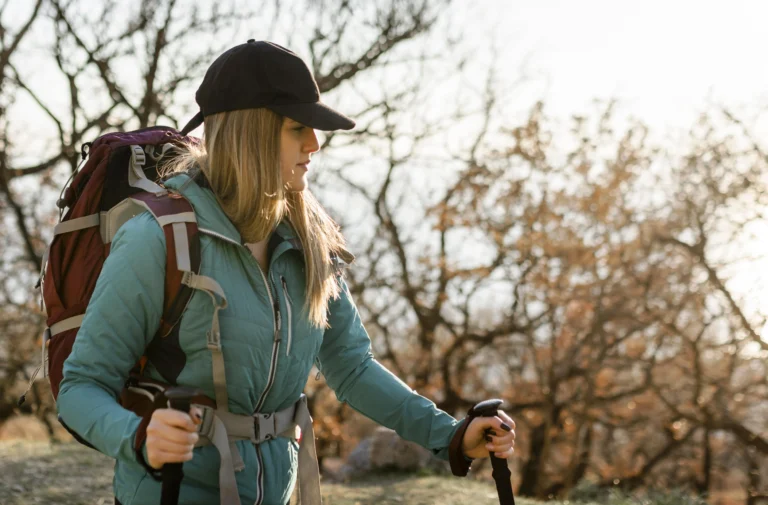
Colorful fleece jacket, black leggings, hiking sneakers. A colorful fleece jacket with black leggings and hiking sneakers is proof that a hiking wardrobe doesn’t need to default to earth tones just because that’s the expected uniform – fleece is the fabric doing the real functional work here, insulating without holding onto moisture, and there’s no reason the color has to be muted for the fabric to perform. Black leggings underneath are the reliable, move-with-you base this whole category depends on. Hiking sneakers are a lighter, more flexible option than a full boot, right for a trail that doesn’t demand heavy ankle support. This is the outfit for someone who’s stopped assuming function has to mean giving up personal color preference.
The Olive Rain Jacket with Charcoal Leggings
Olive rain jacket, charcoal leggings, black hiking shoes. An olive rain jacket with charcoal leggings and black hiking shoes is the outfit built around the one purchase experience tends to teach you is worth making properly – a genuinely waterproof jacket, not just a water-resistant one, since nothing ends a hike faster than being soaked through an hour from the car. Charcoal leggings underneath are a practical, forgiving neutral that hides trail dirt well. Black hiking shoes are lightweight enough for a trail without heavy technical demands. This is the outfit for the day the forecast can’t quite be trusted, dressed with the confidence of knowing exactly what that uncertainty calls for.
The Plaid Shirt with Navy Leggings
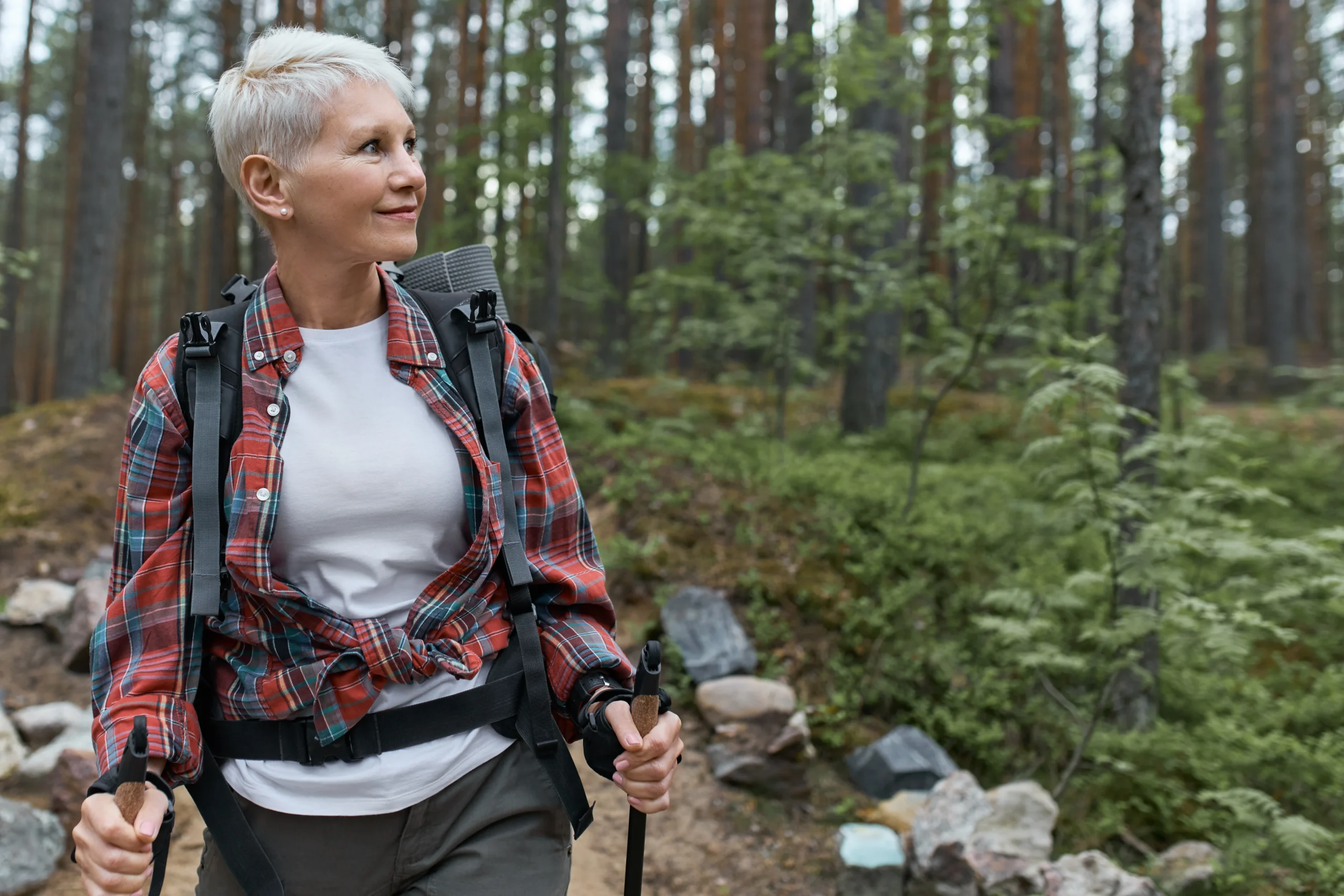
Plaid shirt, navy leggings, white trail sneakers. A plaid shirt with navy leggings and white trail sneakers is the most classic, easy-layering combination in this collection – a plaid button up shirt layers over a base tee and comes off easily once you’ve warmed up, genuinely durable enough to hold up through years of regular wear rather than needing replacement every season. Navy leggings underneath are a versatile alternative to black, and white trail sneakers keep the whole look light and comfortable for an easier trail. This is the outfit for the regular weekend hike, dependable in exactly the way a wardrobe gets once you’ve worn the same reliable pieces long enough to trust them completely.
The Beige Hiking Shirt with Olive Cargo Pants
Beige hiking shirt, olive cargo pants, hiking boots. A beige hiking shirt with olive cargo pants and hiking boots is the most technically equipped outfit in this collection, the kind of combination that comes from years of learning exactly what a real trail day requires. A proper hiking shirt has vented panels and genuine UPF protection built in, meaningfully different from a regular cotton shirt in ways that only become obvious over a long, sun-exposed day. Cargo pants bring real pocket storage, useful for a map, snacks, or a knee brace you’ve learned to bring along. Hiking boots underneath provide the ankle support that matters more with every passing year. This is the outfit for the serious, full-day trail, built by someone who knows exactly what that day demands.
The White Long Sleeve Top with Navy Leggings and Plaid Shirt
White long sleeve top, navy leggings, plaid shirt, hiking boots. A white long sleeve top layered under a plaid shirt with navy leggings and hiking boots is the outfit that gets layering exactly right for a trail that changes temperature more than the forecast suggests – the long sleeve handles the early chill and sun protection, and the plaid shirt on top adds warmth that’s easy to shed the moment the climb gets serious. This is a combination built on the kind of experience that knows a single layer rarely covers an entire hike, no matter how mild the day looks at the trailhead. Hiking boots underneath round out the outfit with real support for whatever the terrain brings.
The Black Rain Jacket with Black Tank and Olive Hiking Pants
Black rain jacket, black tank, olive hiking pants, trail shoes. A black rain jacket over a black tank with olive hiking pants and trail shoes is the outfit for the trail where genuine weather protection matters more than anything else in the pack. Black is the most practical color for a rain shell specifically, since it hides the grime a wet trail inevitably brings better than a lighter color would. Olive hiking pants underneath are built with real stretch and durability, holding up to brush and rock scrambling without restricting your stride. This is the outfit for the trip where checking the forecast twice still isn’t quite enough certainty, dressed with a jacket that actually delivers on its promise.
The Navy Fleece Pullover with Olive Cargo Pants
Navy fleece pullover, olive cargo pants, hiking boots. A navy fleece pullover with olive cargo pants and hiking boots is the outfit with the most quietly confident color pairing in this collection – navy and olive both function almost like neutrals, easy to build around without needing to think much about coordination. The fleece pullover brings real warmth without weight, and cargo pants underneath offer the pocket storage that becomes more valuable the more often you actually hike. Hiking boots provide the ankle support worth prioritizing regardless of how easy a trail looks on paper. This is the outfit for the dependable, go-to combination worn by someone who’s stopped needing to plan a hiking outfit from scratch every time.
The Cream Fleece Pullover with Olive Leggings
Cream fleece pullover, olive leggings, brown hiking boots. A cream fleece pullover with olive leggings and brown hiking boots is the softest, warmest color story in this collection – cream is a genuine departure from the expected black or grey fleece, warm and flattering against most skin tones in a way a cooler shade isn’t. Olive leggings underneath are practical and dirt-hiding, and brown hiking boots tie the whole earthy palette together. This is the outfit for someone who’s learned that a hiking wardrobe doesn’t have to sacrifice personal color preference for practicality, proof the two have never actually been in conflict.
My Best Tips for Hiking Outfits Over 40
What experience actually teaches about dressing for the trail – the investments worth making, the support worth prioritizing, and the pieces that earn their place.
A hiking wardrobe at this stage isn’t about buying more gear, it’s about knowing precisely which gear matters and being willing to invest properly in exactly that. Here is the framework.
The Hiking Palette
A palette that doesn’t assume function means giving up personal preference:
- → Olive and charcoal – the most practical, dirt-hiding neutrals, especially useful for pants and leggings worn regularly.
- → Navy and black – versatile base colors that function almost like neutrals and pair with nearly everything else in a hiking wardrobe.
- → Cream and beige – warmer, more flattering alternatives to the expected grey or black fleece and hiking shirts.
- → Burgundy – a richer, more considered color for an insulating layer, proof function and color preference aren’t actually in conflict.
- → A genuinely colorful fleece – worth owning at least one, since gear you actually like wearing gets worn far more often than gear bought purely for function.
- → What to skip: assuming every piece has to be a muted earth tone. Function comes from fabric, not from the color choice.
Your Three Hiking Formulas
Three combinations that cover the full range of a trail day:
The Weather-Ready Trail
A genuine rain jacket + hiking pants or leggings. Built around the one purchase that actually determines whether uncertain weather cuts a hike short.
The Layered Climb
A long sleeve base + a plaid shirt or fleece + leggings or pants. Adjusts as the temperature does across an entire day on the trail.
The Serious Trail Day
A proper hiking shirt + cargo pants + real hiking boots. The most technically equipped version, built for a demanding, full-day hike.
Prioritizing Ankle and Knee Support
This is the one detail experience tends to teach matters more than almost anything else:
- → Real hiking boots – worth the investment for any trail with uneven terrain, offering the ankle support a lighter sneaker simply doesn’t provide.
- → Trail boots or shoes – a lighter-weight option for easier terrain, still offering more support than a regular sneaker.
- → Hiking sneakers – the most flexible option, right for a well-maintained trail without significant elevation change.
- → What matters most: matching the shoe to the actual terrain rather than defaulting to whatever’s already in the closet.
The Fabrics Worth Investing In
This is exactly the stage where fabric quality earns back its cost many times over:
- → Genuinely waterproof fabric – not just water-resistant, the single biggest difference between a jacket that works and one that doesn’t when it actually rains.
- → Quality fleece – holds its warmth and shape through years of regular wear rather than pilling and thinning out after a season.
- → Vented, UPF-rated hiking shirts – genuinely different from a regular cotton shirt, offering real sun protection over a long day outdoors.
- → Durable, stretch hiking pants – built to move with your stride and hold up to brush and rock without restricting a single step.
The Rain Jacket – Worth Getting Right
If there’s one piece worth spending real time researching before you buy, it’s this one:
- → A genuinely waterproof jacket, not merely water-resistant, is the piece that determines whether an unexpected downpour ends a hike early.
- → Darker colors like black or olive hide trail grime better than a lighter shade over repeated use.
- → It should pack down small enough to bring on any hike, regardless of forecast, since mountain weather changes faster than most apps predict.
- → This is the one purchase worth spending more on than feels comfortable. It’s the piece that gets used the most and regretted the least.
What This Hiking Wardrobe Is Not
A few boundaries worth knowing before you build the wardrobe:
- → Not about buying the cheapest available gear – fabric and fit quality earn their cost back many times over at this stage of a wardrobe.
- → Not about ignoring support – ankle and knee support matter more with every year on the trail, not less.
- → Not about muted colors only – a burgundy vest or a cream fleece still belongs here, since color preference and function aren’t in conflict.
- → Not about a huge gear closet – a handful of well-chosen, properly fitted pieces covers more ground than a lot of impulse purchases ever will.
Building the Hiking Wardrobe
The specific pieces that generate every combination in this collection:
- → 1 genuinely waterproof rain jacket in black and 1 in olive
- → 1 burgundy puffer vest
- → 1 colorful fleece jacket, 1 navy fleece pullover, and 1 cream fleece pullover
- → 1 plaid shirt and 1 beige hiking shirt with proper sun protection
- → 1 white long sleeve top and 1 black tank as base layers
- → Black leggings, navy leggings, charcoal leggings, and olive leggings
- → Black hiking pants and olive cargo hiking pants
- → 1 pair trail boots, 1 pair hiking boots in brown, hiking sneakers, trail shoes, and white trail sneakers
- → From those pieces: every combination in this collection, and a hiking wardrobe built from experience rather than guesswork.
The cheat code: A genuinely waterproof rain jacket with hiking pants and real hiking boots is the outfit that solves the widest range of trail conditions with the least uncertainty. The jacket handles weather no forecast can fully predict. The hiking pants move with your stride and hold up to real terrain. The boots offer the ankle support worth prioritizing on every hike, not just the demanding ones. That is the hiking outfit worth trusting once you’ve learned exactly what matters and what doesn’t.
Copy-Paste Hiking Outfit Template
- ✦ A moisture-wicking base layer, never cotton
- ✦ A genuinely waterproof or windproof outer layer, packable enough to always bring along
- ✦ A hiking pant or legging with real stretch and durability
- ✦ A palette from: olive, charcoal, navy, black, cream, or a color you genuinely like wearing
- ✦ Footwear matched to the actual terrain, with real ankle support where it’s needed
- ✦ No single heavy layer meant to handle the whole trail alone
- Built from experience. Supported where it matters. Confident in exactly what it’s wearing and why.
Frequently Asked Questions
What should women over 40 wear hiking?
A well-built hiking outfit for women over 40 focuses on layering pieces that adjust with the trail, along with real investment in a genuinely waterproof jacket and proper footwear. A base layer with a fleece or plaid shirt handles the temperature range of a typical hike, while hiking pants or leggings with real stretch move comfortably with your stride. Ankle and knee support tend to matter more at this stage, making the right footwear choice especially worthwhile.
Why does footwear support matter more with age?
Ankle and knee support becomes an increasingly important factor in hiking footwear as joints have more years of wear behind them, which is why many experienced hikers over 40 prioritize real hiking boots or trail boots over a basic sneaker, especially on uneven terrain. Matching the shoe to the actual demands of the trail, rather than defaulting to whatever’s already in the closet, tends to make a noticeable difference in comfort.
Is it worth investing in a good rain jacket for hiking?
A genuinely waterproof rain jacket, rather than one that’s merely water-resistant, is widely considered one of the best investments in a hiking wardrobe, since it’s the piece that most directly determines whether unexpected weather cuts a hike short. It’s worth prioritizing spending here over many other pieces, since a good rain jacket gets used repeatedly and rarely disappoints when it matters.
Can hiking clothes be colorful, or do they need to be earth tones?
Hiking clothes don’t need to stick to muted earth tones to be functional, since performance comes from the fabric itself rather than the color. A colorful fleece or a richer tone like burgundy works just as well functionally as an olive or grey version, and gear in a color you genuinely enjoy tends to get worn more often than something chosen purely for practicality.
What fabrics are worth prioritizing for a hiking wardrobe?
Genuinely waterproof fabric for outer layers, quality fleece for insulation, and UPF-rated hiking shirts for sun protection are all worth prioritizing, since each performs meaningfully better than a basic cotton alternative over a real day on the trail. Durable, stretch hiking pants also matter, since they hold up to brush and rock scrambling without restricting movement the way regular pants or jeans would.