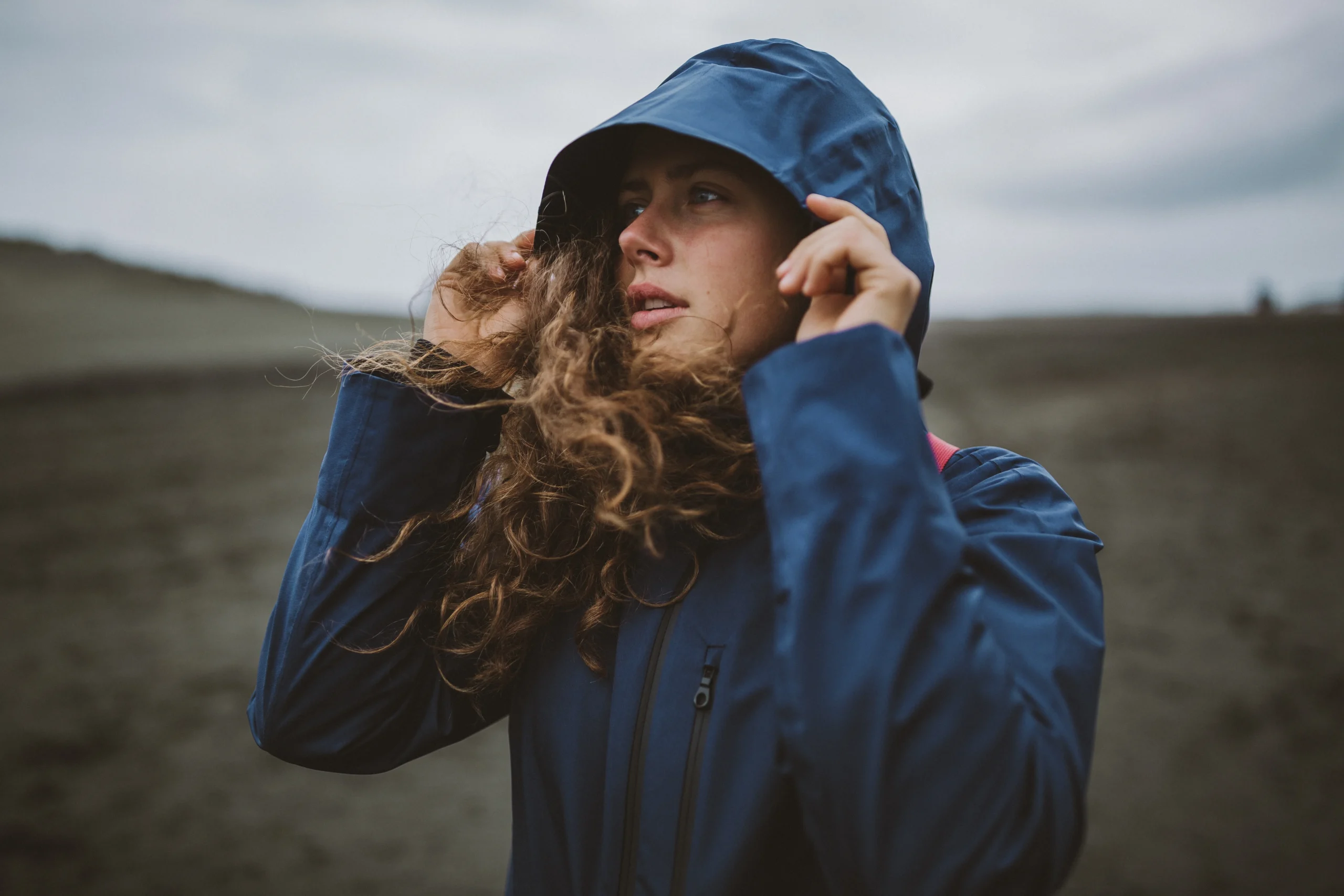
Rain changes hiking from a fashion question into a systems question. Nobody gets wet from rain alone. You get wet from rain on the outside and sweat on the inside, and the outfit that fails is almost always the one that only solved the first half. A jacket that blocks water but traps every drop of perspiration will leave you just as damp, just a little more slowly.
9 Hiking Outfits for Rainy Days That Keep You Dry and Moving
1. Light Gray Hooded Rain Jacket with Black Waterproof Hiking Pants, Black Backpack and Trail Sneakers
Light gray hooded rain jacket, black waterproof hiking pants, black backpack, trail sneakers.
This is the full-protection starter set. A hooded shell and waterproof pants cover the two places rain reaches first, your shoulders and your thighs, and the dark pants hide the mud that is inevitable on a wet trail. The light gray jacket stays visible in gray weather, which matters on foggy paths. Trail sneakers with a grippy sole work for well-kept trails where full boots would be heavy.
2. Oversized Black Waterproof Jacket with Black Leggings, Headband, Sport Sunglasses and Hiking Boots
Oversized black waterproof jacket, black leggings, headband, sport sunglasses, hiking boots.
An oversized shell has a practical advantage on rainy days: room underneath. That space lets you wear a fleece or vest without compressing it, and it lets air circulate so sweat can escape. Leggings dry faster than cotton jeans or heavy trousers, which makes them a good choice for showers rather than steady downpours. Sunglasses look odd with rain, but they help when the sun breaks through wet rock and shiny leaves.
3. Blue Hooded Rain Jacket with Black Waterproof Pants, Crossbody Bag and Hiking Shoes
Blue hooded rain jacket, black waterproof pants, crossbody bag, hiking shoes.
The short-walk setup for waterfall paths, boardwalks and nature loops. A bright blue shell stands out against green and gray, and a crossbody bag keeps the essentials within reach and under the jacket’s edge where rain cannot soak through. For a short outing you do not need a full pack, just a bag you can reach without taking off your coat.
4. Black Puffer Jacket with Black Leggings, White Crew Socks, Hiking Boots and Backpack
Black puffer jacket, black leggings, white crew socks, hiking boots, backpack.
This one is for cold, damp, but not pouring days. A puffer holds heat well, but the insulation in many puffers loses much of its warmth when soaked, so use it as the mid-layer under a shell if rain is likely, or choose one with a water-resistant outer. Pack a rain jacket to go over it, and you have a fully protected cold-weather system.
5. Black Hooded Rain Jacket with Black Biker Shorts, White Crew Socks, Trail Sneakers and Pink Backpack
Black hooded rain jacket, black biker shorts, white crew socks, trail sneakers, pink backpack.
A warm summer-rain outfit. When the temperature is high, a shell on top and bare legs below is often the most comfortable choice, because legs dry quickly and do not overheat in waterproof pants. Biker shorts will not hang heavy when wet, and crew socks protect against rubbing as shoes get damp. The pink pack adds a playful splash of color on a gray day.
6. Purple Waterproof Hiking Jacket with Black Rain Pants, Backpack and White Trail Shoes
Purple waterproof hiking jacket, black rain pants, backpack, white trail shoes.
A true waterproof hiking jacket usually has taped seams, a structured hood and zippered vents under the arms. Those vents are the part people overlook: opening them while climbing releases heat without letting rain in. Purple is a strong color choice for visibility in fog and low light, and it looks great against wet green foliage.
7. Light Blue Hiking Jacket with Wide-Leg Gray Cargo Pants, Black Hiking Vest, Sport Sunglasses and White Sneakers
Light blue hiking jacket, wide-leg gray cargo pants, black hiking vest, sport sunglasses, white sneakers.
A lighter, layered option for mist, drizzle and changeable skies. The vest adds warmth to the core, while the jacket handles the light rain. Wide-leg cargo pants dry reasonably quickly, but be careful with hems: wide legs catch water and mud, so keep them cuffed or tucked on very wet trails. A good fit for short, easy walks and park paths.
8. Black Waterproof Shell Jacket with Taupe Cargo Pants, White Beanie and Brown Hiking Boots
Black waterproof shell jacket, taupe cargo pants, white beanie, brown hiking boots.
The cool, wet autumn outfit. A beanie under the hood holds warmth where you lose it fastest, and boots with ankle coverage protect against puddles and mud. Taupe cargo pants are not waterproof, so this works for lighter rain, and the shell keeps your upper body dry where it matters most. It is a balanced, practical outfit for a misty morning.
9. Black Waterproof Hiking Jacket with Two-Tone Gray Rain Pants and Brown Hiking Boots
Black waterproof hiking jacket, two-tone gray rain pants, brown hiking boots.
This is the all-weather, serious-rain outfit. A full waterproof set from head to boot is the right answer for long hikes in persistent rain, where being wet means getting cold. Rain pants that pull on over regular layers are easy to pack and take little room. Brown boots with a waterproof lining and good tread finish a setup built for heavy weather.
My Best Tips for Hiking in the Rain
01The Rainy-Day Palette
Black and gray hide mud and look sharp, but add one bright piece, such as a blue, purple or pink jacket or pack. Visibility in fog and low light is a real safety advantage on wet days, especially in a group.
02Your Three Rainy Formulas
The Drizzle Walk: light rain jacket, leggings or quick-dry pants, trail shoes. The Warm Rain: shell, shorts, quick-dry socks and trail sneakers. The Cold Downpour: base layer, insulating layer, full waterproof jacket and pants, boots and beanie.
03Water-Resistant Is Not Waterproof
Water-resistant jackets shed a light shower for a short time, then soak through. Waterproof ones have a membrane and sealed seams for sustained rain. Check the label and match it to the forecast, and reapply a water-repellent treatment to older jackets when the water stops beading.
04Breathability Matters as Much as Waterproofing
A shell that does not breathe will leave you wet from sweat. Look for pit zips or vents, open them on climbs and close them when you stop. Keep layers underneath thin enough to let moisture pass through.
05Skip Cotton
Wet cotton clings, dries slowly and stops insulating, which can make you cold quickly. Choose synthetic or merino for anything touching your skin, especially socks and base layers. It is the single biggest comfort upgrade you can make.
06Think Hood, Brim and Feet
A hood with a stiff brim keeps rain off your face, or you can wear a cap underneath. For feet, boots with a waterproof lining keep puddles out, but they dry slowly, so some hikers prefer quick-drying trail shoes and wool socks on warm days. Carry a spare pair of socks in a bag.
07Protect What Is in Your Pack
Use a pack cover or line your pack with a bag, and keep your phone, map and spare layer in sealed pouches. A dry layer waiting at the end of the hike is worth more than any extra gear. Wet trails are also slippery, so slow down on rocks and roots.
Copy-Paste Rainy Day Hiking Outfit Template
✶ Base: Synthetic or merino long-sleeve or tee, no cotton.
✶ Mid-layer: Fleece, vest or lightweight puffer for cool weather.
✶ Shell: Waterproof hooded jacket with vents, in a bright or visible color.
✶ Bottom: Rain pants over leggings, quick-dry pants or shorts for warm rain.
✶ Head: Beanie, cap or hood with a brim.
✶ Feet: Wool or synthetic socks and grippy waterproof boots or trail shoes.
Dry on the inside is the whole point.
Rainy Day Hiking Outfit FAQ
What should I wear hiking in the rain?
Use three layers: a moisture-wicking base, a warm mid-layer if needed, and a waterproof, breathable shell with a hood. Add rain pants for heavy or prolonged rain, and wear footwear with good grip. Avoid cotton, which stays wet and loses its warmth.
Are leggings good for hiking in the rain?
They are a decent choice for light showers because they dry quickly and do not get heavy like cotton pants. For sustained rain or cold weather, pull rain pants over them for waterproof protection.
Do I need waterproof hiking boots?
Not always. Waterproof boots keep out puddles and light wet but are slow to dry if water gets in over the top. On warm days, many hikers choose quick-drying trail shoes with wool socks. For cold, wet conditions, waterproof boots are usually the better choice.
How do I avoid getting sweaty under a rain jacket?
Choose a breathable shell with underarm vents, open them while climbing, and keep your layers thin. Slow your pace slightly on steep sections, and take a layer off before you start to overheat rather than after.
Is it safe to hike in the rain?
Often yes, with preparation, but check the forecast and trail conditions first. Wet rocks and roots are slippery, streams can rise quickly, and lightning or flooding can make some trails unsafe. If conditions look severe, choose a different day or a lower, more sheltered route.