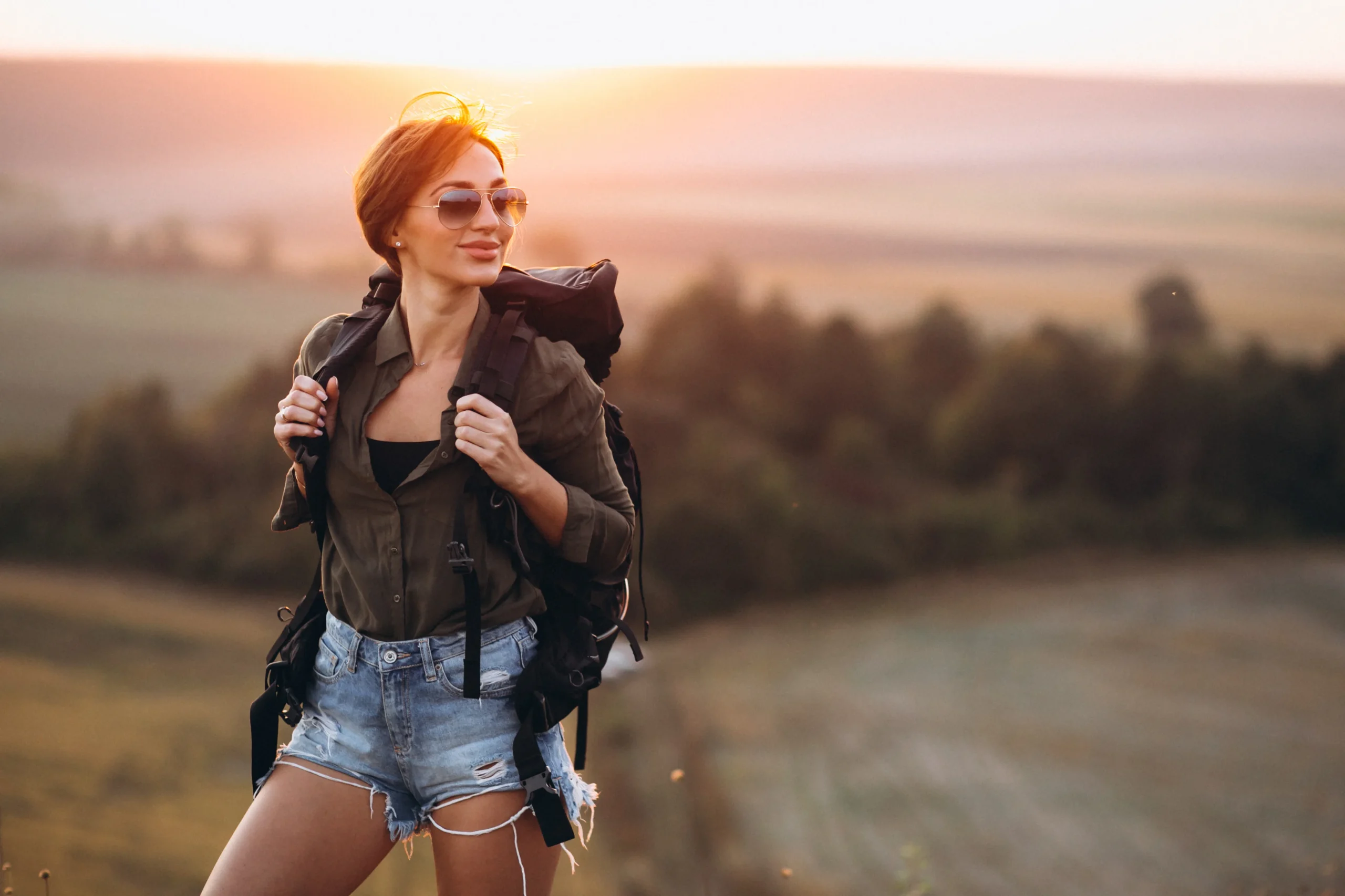
A national park day is not one hike. It is a sunrise at a cold overlook, a boardwalk stroll with a crowd, a three-mile trail in full sun, a picnic lunch, a shuttle bus, a visitor center and maybe a ranger talk at dusk. The temperature can swing by 30 degrees between the first stop and the last, and you will probably be dressed for all of it from a single backpack.
That is why the best national park outfit is not the one that looks best at the trailhead sign. It is the one that adapts. A base that works at every stop, layers that go on and off in seconds, sun protection that does not need a second thought, and shoes that handle gravel, boardwalks and rocky switchbacks equally well.
Our Favorite Hiking Outfits for National Parks
1. Beige Quarter-Zip Hiking Top with Taupe Cargo Pants, Baseball Cap, Backpack and Beige Hiking Boots
Beige quarter-zip, taupe cargo pants, baseball cap, backpack, beige hiking boots.
This is the all-day default. The quarter-zip handles a cold morning with the zip up and a warm midday climb with it open, no stopping required. Cargo pockets hold the park map, your phone and your pass, so you are not digging through the pack at every junction. In earthy tones, it also looks right in a photo whether the backdrop is red rock, pine forest or granite.
2. Black Lightweight Hiking Jacket with Khaki Cargo Pants, Headband, Red Backpack and Trail Shoes
Black lightweight hiking jacket, khaki cargo pants, headband, red backpack, trail shoes.
A packable jacket is the single most useful item for park weather, because conditions change fast near mountains and coasts. This one blocks wind at an exposed overlook and folds into the bag when the sun returns. The red pack adds a bright accent that stands out against the landscape, and it helps your group find each other in a crowded parking area.
3. Pink Zip-Up Active Jacket with Black Leggings, White Crew Socks and Hiking Boots
Pink zip-up active jacket, black leggings, white crew socks, hiking boots.
The easy-access outfit for the park’s shorter, scenic walks, like waterfall trails, lake loops and viewpoint paths. Leggings are comfortable for a long day of getting in and out of the car, and the zip-up jacket works as a layer when you step into shade or spray. The pink is a cheerful pop against forest greens and gray rock.
4. Oversized Green Graphic Sweatshirt with Black Leggings, Baseball Cap, White Socks and Sneakers
Oversized green graphic sweatshirt, black leggings, baseball cap, white socks, sneakers.
A cozy choice for the low-effort part of a park trip: the scenic drive, boardwalk geysers, the lodge porch and the evening campfire. A graphic sweatshirt is also the classic park souvenir, so wearing one feels right. For anything beyond a flat walk, swap it for a technical layer, because cotton fleece does not do well when you sweat or when it rains.
5. Black Hiking Vest with Black Long-Sleeve Top, Olive Cargo Pants, Baseball Cap and Trail Shoes
Black hiking vest, black long-sleeve top, olive cargo pants, baseball cap, trail shoes.
The shoulder-season outfit. A vest keeps your core warm during cool mornings and in the shade of a canyon, while your arms stay free and cool as you climb. Long sleeves protect against sun and scratchy brush, and they are good against insects in the evening. It is a layered, practical combination that lasts through spring and autumn.
6. Black Technical Hiking Jacket with Cream Cargo Pants, Backpack, Sport Sunglasses and Trail Sneakers
Black technical hiking jacket, cream cargo pants, backpack, sport sunglasses, trail sneakers.
For high-elevation parks where the weather is serious. Temperatures generally fall roughly 3 to 5 degrees Fahrenheit for every 1,000 feet you climb, and wind on a ridge makes it feel colder. A technical jacket handles that wind and light rain, and sport sunglasses cut the glare off rock, snow and water. Cream pants stay cooler in direct sun than dark ones.
7. Olive Tank Top with Brown Hiking Pants, Backpack and Gray Hiking Boots
Olive tank top, brown hiking pants, backpack, gray hiking boots.
The desert and summer outfit. In hot, dry parks the goal is airflow and fast drying, and a tank with lightweight pants does both. Keep a long-sleeve shirt and a hat in the pack, because sun exposure adds up even when it does not feel hot. Pants also protect your legs from cactus, sharp grass and sandy scrapes on rocky scrambles.
8. Burgundy Striped Long-Sleeve Top with Pale Yellow Shorts, Bandana, White Crew Socks and Gray Trail Shoes
Burgundy striped long-sleeve top, pale yellow shorts, bandana, white crew socks, gray trail shoes.
Warm, sunny days at lower elevations call for shorts, and a long-sleeve top keeps your shoulders and arms covered while you walk. The bandana is multi-purpose: a sweat band, a neck shade, a cooling cloth when dipped in a creek. It is an easy, happy outfit for a day of short trails and picnic stops.
My Best Tips for Dressing for a National Park Day
01The National Park Palette
Earth tones like beige, olive, khaki and brown blend naturally with the landscape, and one bright accent in a jacket or pack makes you easy to spot and easy to photograph. Avoid anything that gets lost against the scenery in a group.
02Your Three Park-Day Formulas
The Scenic Day: leggings or light pants, zip-up layer, comfortable sneakers. The Full Trail Day: quarter-zip, cargo pants, cap, boots, pack. The High-Elevation Day: base layer, vest, technical jacket, sunglasses. Match the formula to the park, not the weather at your hotel.
03Dress for the Swing, Not the Average
Check the low and the high for the day, then dress for the cold start and carry the layers for the rest. A morning that starts at 40 degrees can end at 75. If you can only wear one thing, wear the layer you can remove.
04Respect the Elevation
Higher parks are colder, windier and have stronger sun. Add a warm layer, a hat and sunscreen even when the forecast looks mild, and expect afternoon storms in many mountain regions. Check the park’s own website for current conditions before you leave.
05Sun Protection Is Part of the Outfit
A cap or wide-brim hat, sunglasses, a long-sleeve top and sunscreen are the baseline. Many park trails have little shade, and sun at elevation is more intense. Treat these as outfit pieces, not afterthoughts.
06Choose Shoes for the Surface
Boardwalks and paved paths are fine in sneakers, but rocky, steep or wet trails need grip and ankle support. If your day includes both, trail shoes are the best compromise. Break them in before the trip, not on day one.
07Pack the Essentials Properly
A small day pack with water, snacks, a map, a spare layer and a rain jacket is the core kit. Parks often have limited cell service, so download offline maps first. The outfit gets you to the trailhead, but the pack is what gets you home.
Copy-Paste National Park Outfit Template
✶ Base: Moisture-wicking quarter-zip, long-sleeve or tank in a neutral tone.
✶ Layer: Vest, fleece or lightweight packable jacket for the cold start.
✶ Bottom: Cargo pants, hiking pants or leggings depending on the trail.
✶ Head: Cap, headband or bandana plus sunglasses.
✶ Pack: Day pack with water, snacks, map and a rain layer.
✶ Feet: Cushioned crew socks with trail shoes or boots.
Dressed for the whole day, not just the first stop.
National Park Hiking Outfit FAQ
What should I wear to a national park in summer?
Breathable, quick-drying clothes like a tank or short-sleeve top with lightweight pants or shorts. Add a hat, sunglasses and sunscreen, and keep a long-sleeve layer in your pack. Even in hot parks, mornings and evenings can be cool and mountain weather can change quickly.
Are leggings okay for hiking in national parks?
Yes, for scenic walks and easy to moderate trails. They are comfortable and move well. For rocky scrambles or areas with thorny plants, hiking pants offer better protection and durability.
Should I wear boots or sneakers?
It depends on the terrain. Sneakers are fine for paved paths and boardwalks. For rocky, uneven or wet trails, trail shoes or boots offer grip and support. If your day includes everything, trail shoes are the most versatile.
How many layers should I bring?
At minimum, a base layer, a warm mid-layer like a vest or fleece, and a wind or rain jacket. In many parks the weather changes quickly, so it is better to carry a layer you do not need than to need one you do not have.
What colors are best for national park photos?
Earth tones such as olive, beige and brown blend naturally, while one brighter accent like red, pink or burgundy stands out against rock, trees and sky. Avoid very pale or very dark outfits in harsh midday light.