The funny thing about skiing is that you are never the right temperature. You stand in the lift line shivering, ride a chairlift at altitude with the wind in your face, then ski a steep run and suddenly you are overheating. Then you stop at the top, and the sweat you just made turns cold. If you dress for the run, you freeze on the chairlift. If you dress for the chairlift, you boil on the way down.
Our Favorite Skiing Outfits for Women
1. Lavender Ski Jacket, Blue-Grey Snow Bib Pants, White Beanie, Ski Goggles and White Snow Boots
Lavender ski jacket, blue-grey snow bib pants, white beanie, ski goggles, white snow boots.
A soft pastel palette that looks fresh against the snow. Bib pants are an excellent choice because they cover your lower back and keep snow out when you fall, and they hold warmth around your core. The snow boots and beanie make this a great outfit for a beginner day, a snowy walk, a sledding trip or the lodge. For downhill skiing, switch to ski boots and add a helmet.
2. White and Black Ski Sweater, Black Ski Pants, White Beanie, White Sunglasses and White Ski Boots
White and black ski sweater, black ski pants, white beanie, white sunglasses, white ski boots.
The lodge and sunny-day look. A knit ski sweater is wonderfully cozy at the base and on a warm spring day, but it is not a shell, so it will not keep out wind or wet snow on its own. Wear it as a mid-layer under a jacket in colder weather, or keep it for après-ski. The sunglasses suit a bright afternoon, but goggles are better in wind or flat light.
3. Sage Green Ski Jacket, Black Snow Pants, Grey Beanie, Black Gloves and Ski Goggles
Sage green ski jacket, black snow pants, grey beanie, black gloves, ski goggles.
Sage green is a quiet, modern color that looks lovely against snow and pine trees. Black snow pants are practical and hide any wear. A beanie and goggles are great for the chairlift or gentle runs, though a helmet adds important protection when you ski faster. Check that the jacket has a powder skirt and vents.
4. Black Belted Puffer Jacket, White Ski Pants, White Helmet, Mirrored Goggles and Black Gloves
Black belted puffer jacket, white ski pants, white helmet, mirrored goggles, black gloves.
A flattering, tailored silhouette. The belt defines the waist, and the white pants make a crisp contrast with black. A puffer is very warm on a cold day, but check whether it is waterproof, as many puffers are only water-resistant. If it is not, wear a waterproof shell on wet or snowy days.
5. Red Patterned Fleece, Black Puffer Vest, Black Snow Pants, Grey Beanie and Ski Goggles
Red patterned fleece, black puffer vest, black snow pants, grey beanie, ski goggles.
A look at the mid-layer, the part of the system that does the real warming. A fleece with a puffer vest over it keeps your core warm while leaving your arms free to move. This is the kind of combination you would wear under a shell on a cold day, or on its own on a mild one. The red pattern adds a good dose of cheer.
6. White Ski Jacket, Matching White Ski Pants, Grey Helmet, Pink Goggles and Black Gloves
White ski jacket, matching white ski pants, grey helmet, pink goggles, black gloves.
The head-to-toe white set is a bold, glamorous choice. Pink goggles bring a punch of color, and a grey helmet grounds the outfit. One practical thought: white on white blends into snow, so a brighter accessory helps other skiers see you. This works in good visibility, but add a bright layer in flat light.
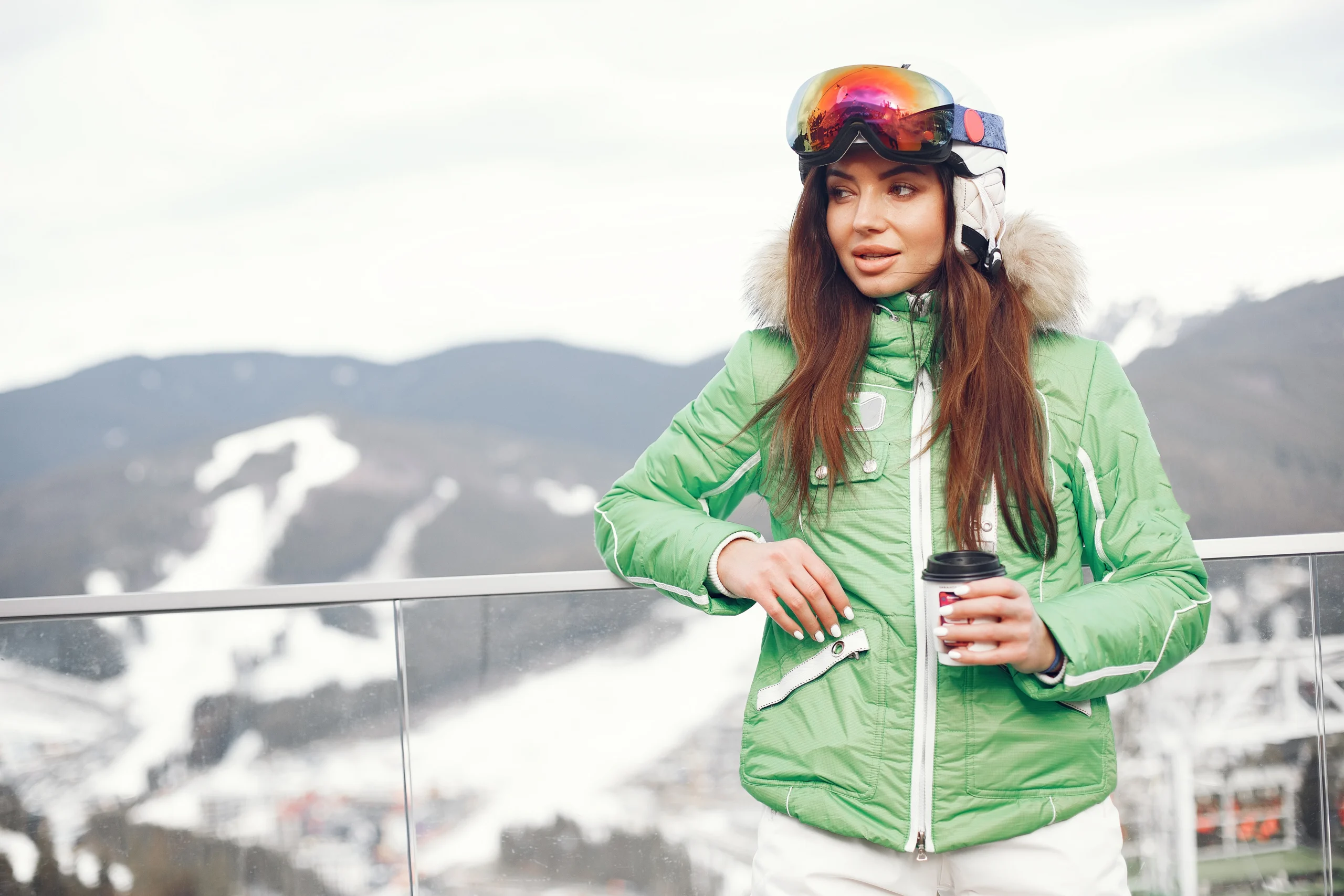
7. Mint Green Ski Jacket, Black Ski Pants, Black Helmet, Pink Goggles and White Gloves
Mint green ski jacket, black ski pants, black helmet, pink goggles, white gloves.
A fresh, bright jacket with black below is the most popular combination on the slopes, and for good reason. Mint stands out against snow and trees. Pink goggles add the finishing touch. White gloves look lovely but show dirt, so choose a darker pair for everyday skiing.
8. Dusty Pink Ski Jacket, White Snow Pants, White Helmet, Pink Goggles and White Ski Boots
Dusty pink ski jacket, white snow pants, white helmet, pink goggles, white ski boots.
A soft, tonal outfit with a feminine feel. Dusty pink and white are gentle together, and the matching pink goggles tie it all together. This is a lovely sunny-day outfit for groomed runs. Make sure your ski boots fit well, since they are the most important gear for comfort and control.
9. Black Puffer Jacket, Black Ski Pants, Black Helmet, Mirrored Goggles and Black Mittens
Black puffer jacket, black ski pants, black helmet, mirrored goggles, black mittens.
All-black minimalism with a practical twist: mittens. Mittens keep your fingers together and are warmer than gloves, which makes a real difference on cold chairlifts. The black puffer is easy to style, and the mirrored goggles look sleek and cut glare. A smart choice for cold days and freezing hands.
10. Light Blue Puffer Jacket, Black Ski Pants, Black Helmet, Ski Goggles and Black Ski Boots
Light blue puffer jacket, black ski pants, black helmet, ski goggles, black ski boots.
Light blue is a calm, flattering color that reads well in photos, and black pants anchor it. A puffer is warm for cold mornings, but remember to vent or remove it when you start to sweat. Add a thin neck gaiter under the collar to close the gap where cold air gets in.
My Best Tips for Skiing Outfits for Women
01The Skiing Palette
Black pants are a reliable base, with one bright or pastel jacket on top: lavender, mint, sage, dusty pink or light blue. Add accents through goggles and a beanie. Avoid white-on-white in poor visibility, since you want to be seen.
02Your Three Layers
Base: thin merino or synthetic top and leggings that wick sweat. Mid: fleece, vest or light puffer for warmth. Shell: waterproof, windproof jacket and pants with vents. Adjust the mid-layer to the temperature.
03Skip Cotton
Cotton absorbs sweat and stays wet, which makes you cold. Wear merino or synthetic fabrics next to your skin, including socks. This is the most important rule of dressing for snow.
04Always Wear a Helmet
A helmet protects your head and keeps it warm. Choose one that fits snugly and works with your goggles, and replace it after a hard impact. A beanie is fine for the lodge and the walk, but it is not protection on the slope.
05Get Goggles, Gloves and a Gaiter Right
Goggles protect against wind, glare and flat light, and the lens color matters: darker for sun, lighter for cloud. Mittens are warmer than gloves, and a neck gaiter closes the gap at your collar. Carry a spare pair of gloves in your jacket.
06Use Vents and Zips
Underarm and leg vents release heat during a run, and you can close them on the lift. Learn where your zips are before you go. Opening a vent early is better than getting sweaty and then cold.
07Invest in Socks and Boots
Wear one pair of thin, ski-specific socks, and avoid doubling up, which restricts circulation and causes cold feet. Get your boots professionally fitted, since a good fit matters more than any jacket. Dry your boots and liners every night.
Copy-Paste Skiing Outfit Template
✶ Base: Merino or synthetic top and leggings, no cotton.
✶ Mid: Fleece, puffer vest or light puffer, adjusted to the temperature.
✶ Shell: Waterproof jacket and pants (or bibs) with vents, in a color you love.
✶ Head: Certified ski helmet, goggles and a neck gaiter.
✶ Hands: Insulated mittens or gloves, with a spare pair.
✶ Feet: Thin ski socks and professionally fitted boots.
Warm on the lift, comfortable on the run.
Skiing Outfits for Women FAQ
What should I wear skiing?
Dress in three layers: a moisture-wicking base layer, an insulating mid-layer such as fleece, and a waterproof, windproof shell jacket and pants. Add a helmet, goggles, gloves or mittens, a neck gaiter and ski socks. Avoid cotton.
Are bib pants better than regular ski pants?
Bibs cover your lower back and stop snow getting in when you fall, so many skiers find them warmer. Regular ski pants are simpler for bathroom stops. Both work, so choose the style you find more comfortable.
Is a puffer jacket good for skiing?
A puffer is warm, but many are only water-resistant. For snowy or wet days, wear a waterproof shell over it, or choose a ski jacket with an insulated, waterproof construction. Puffers work well as mid-layers or for dry, cold days.
Mittens or gloves for skiing?
Mittens are warmer because your fingers share heat, while gloves offer more dexterity. If your hands get cold easily, choose mittens. Either way, bring a spare pair in case the first gets wet.
Do I need to wear a helmet?
It is strongly recommended. A helmet protects your head in falls and collisions, and it keeps you warm. Choose a snug-fitting helmet that is compatible with your goggles and meets safety standards.