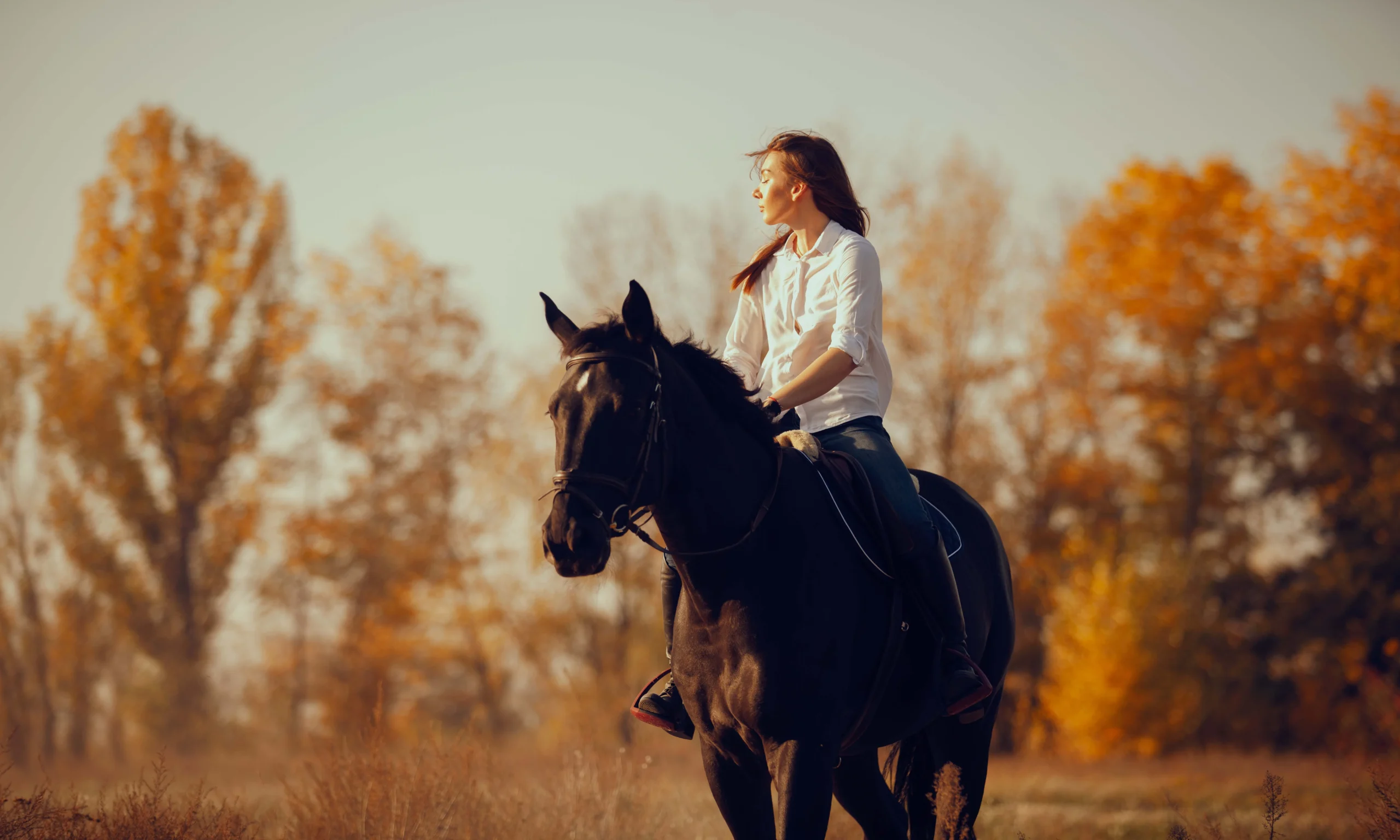
Horseback riding is the one outfit topic on this blog where I have to start with the boring part, because it matters. What you wear on a horse is not only about how it looks. It decides whether your foot can slip through a stirrup, whether your legs can grip comfortably for two hours, and whether your head is protected if something goes wrong. Style comes second, and the good news is that it comes along for free once the basics are right.
Our Favorite Horseback Riding Outfits
1. Denim Jacket, White T-Shirt, Blue Jeans and Brown Cowboy Hat
Denim jacket, white t-shirt, blue jeans, brown cowboy hat.
The classic Western trail outfit. A tee under a denim jacket is easy to adjust as the day warms up, and jeans are a traditional choice for Western riding. Wear boots with a heel rather than sneakers, and keep in mind that a cowboy hat is style, not protection. If you are a beginner or riding a new horse, wear a certified riding helmet.
2. Beige Riding Polo, Navy Breeches, Black Riding Boots and Helmet
Beige riding polo, navy breeches, black riding boots, helmet.
A lesson-ready English outfit. A fitted polo keeps fabric away from the reins, breeches are designed to be comfortable in the saddle without seams rubbing your inner leg, and tall boots protect your calves and keep your leg steady. The helmet is the key piece. Choose one that meets recognized safety standards, such as ASTM or SEI certification, and make sure it fits snugly.
3. Plaid Shirt, Blue Jeans and Brown Cowboy Hat
Plaid shirt, blue jeans, brown cowboy hat.
The ranch-weekend look. A plaid shirt is breathable, durable and traditional, and it looks right in a barn or at a trailhead. Choose a shirt with long sleeves to protect your arms from the sun and from brush on the trail, and jeans with a smooth inner seam so you do not rub in the saddle.
4. Patterned Western Jacket, Blue Jeans, Cowboy Boots and Beige Hat
Patterned western jacket, blue jeans, cowboy boots, beige hat.
A more styled Western look, good for events, trail rides with friends and photos. A patterned jacket adds interest, and cowboy boots with a defined heel are designed to stay in the stirrup without sliding through. Make sure the jacket is not so loose that it flaps or catches on tack.
5. Black Riding Top, Black Breeches, Tall Riding Boots and Helmet
Black riding top, black breeches, tall riding boots, helmet.
The sleek schooling outfit. All black is clean, slimming and forgiving of dust and horse hair. A fitted top keeps clothing away from the horse’s movements, and tall boots with breeches create a long, tidy leg line. Check that your breeches fit comfortably when you sit and bend, since you will be in the saddle for a long time.
6. Black Fitted T-Shirt, Light Blue Jeans, Straw Cowboy Hat and Brown Boots
Black fitted t-shirt, light blue jeans, straw cowboy hat, brown boots.
A warm-weather trail ride. A fitted tee is cooler than a loose shirt and will not catch on branches, and a straw hat gives airy sun protection. Remember sunscreen on your neck and arms, and bring water. If the ride is more than a gentle walk, a helmet is still a smart choice.
7. White Polo Shirt, Black Vest, White Breeches and Black Riding Boots
White polo shirt, black vest, white breeches, black riding boots.
A classic English look, neat and traditional. White breeches and a polo are crisp, but they show every mark, so keep them for lessons where appearance matters and clean up afterward. A vest adds a layer without sleeves to catch on tack. If you jump or ride young horses, a separate safety vest is something to ask your instructor about.
8. Brown Sweatshirt, White Breeches and Brown Riding Boots
Brown sweatshirt, white breeches, brown riding boots.
The cool-morning barn outfit. A snug sweatshirt over breeches keeps you warm while you groom and tack up. Brown boots and white breeches look warm and classic. Take off bulky layers before you ride, so you can move freely and see your position.
9. Grey Zip-Up Hoodie, Burgundy Breeches and Black Riding Boots
Grey zip-up hoodie, burgundy breeches, black riding boots.
A cozy winter outfit with a bit of color. A zip-up hoodie is easy to take off when you warm up, and burgundy breeches are a rich alternative to the usual tan or black. Choose a hoodie without long drawstrings, since loose cords can catch on tack and equipment.
My Best Tips for Horseback Riding Outfits
01The Riding Palette
Black, navy, white, beige, brown and burgundy are traditional, practical colors. Dark colors hide dirt, and neutrals look smart. Add one accent, such as a patterned jacket or a colorful saddle pad.
02Your Three Riding Formulas
The English Lesson: fitted polo or riding top, breeches, tall or paddock boots, helmet. The Western Trail: long-sleeve shirt, jeans, heeled boots, hat for sun, helmet when needed. The Barn Day: layers you can remove, breeches or jeans, sturdy boots.
03Wear a Certified Helmet
This is the one non-negotiable. A cowboy hat is not protective. Choose a helmet that meets a recognized standard such as ASTM or SEI, fits snugly without moving, and replace it after any significant fall. Many instructors will not let you ride without one.
04Boots Need a Heel
Riding boots have a small, defined heel so your foot cannot slide through the stirrup. Sneakers, flat shoes and sandals are unsafe on a horse. Choose boots with a smooth sole, and make sure they are comfortable to walk in.
05Choose Breeches or Jeans Carefully
Breeches are made for riding, with flat seams and grip where you need it. Jeans work for casual Western riding, but thick inner seams can rub on long rides. Whichever you choose, avoid baggy legs and rough seams.
06Keep Things Fitted and Secure
Avoid loose scarves, dangling jewelry, long drawstrings and baggy sleeves, which can catch on tack or spook a horse. Tie long hair back. Fitted layers are safer and give your instructor a clear view of your position.
07Dress in Layers
Barns can be cold at dawn and hot by midday. A zip-up layer or vest that you can remove easily is ideal. Add gloves for grip in cold weather, and sunscreen and sunglasses for summer rides.
Copy-Paste Horseback Riding Outfit Template
✶ Head: Certified helmet, snug fit, replaced after any hard fall.
✶ Top: Fitted polo or riding top (English), or long-sleeve shirt (Western).
✶ Layer: Zip-up hoodie, vest or denim jacket you can remove easily.
✶ Bottom: Breeches with flat seams, or smooth-seamed jeans for casual Western riding.
✶ Boots: Riding or cowboy boots with a defined heel and smooth sole.
✶ Rule: Nothing loose, dangling or flapping.
Safe in the saddle, good-looking on the ground.
Horseback Riding Outfits FAQ
What should I wear for my first horseback riding lesson?
Wear long, comfortable pants such as leggings or jeans, a fitted top, and shoes or boots with a small heel. Most stables provide helmets for beginners, but check in advance. Avoid loose clothing, sandals and flat-soled shoes.
Do I need breeches?
Not for your first lesson, but they are worth buying if you ride regularly. Breeches are designed to be comfortable in the saddle, with flat seams and good grip. Leggings can work in the meantime, though thick seams can rub.
Can I wear jeans to ride a horse?
Yes, especially for Western riding. Choose a pair that fits well and has a smooth inner seam, and avoid very baggy or ripped jeans. For longer rides, breeches or riding tights are more comfortable.
Is a cowboy hat enough protection?
No. A cowboy hat shades you from the sun but offers no protection in a fall. Wear a certified riding helmet instead, or in addition to the hat for photos once you are off the horse.
What boots are best for riding?
Tall English boots, paddock boots or cowboy boots, all with a small defined heel and smooth sole. The heel keeps your foot from sliding through the stirrup. Never ride in sneakers or sandals.