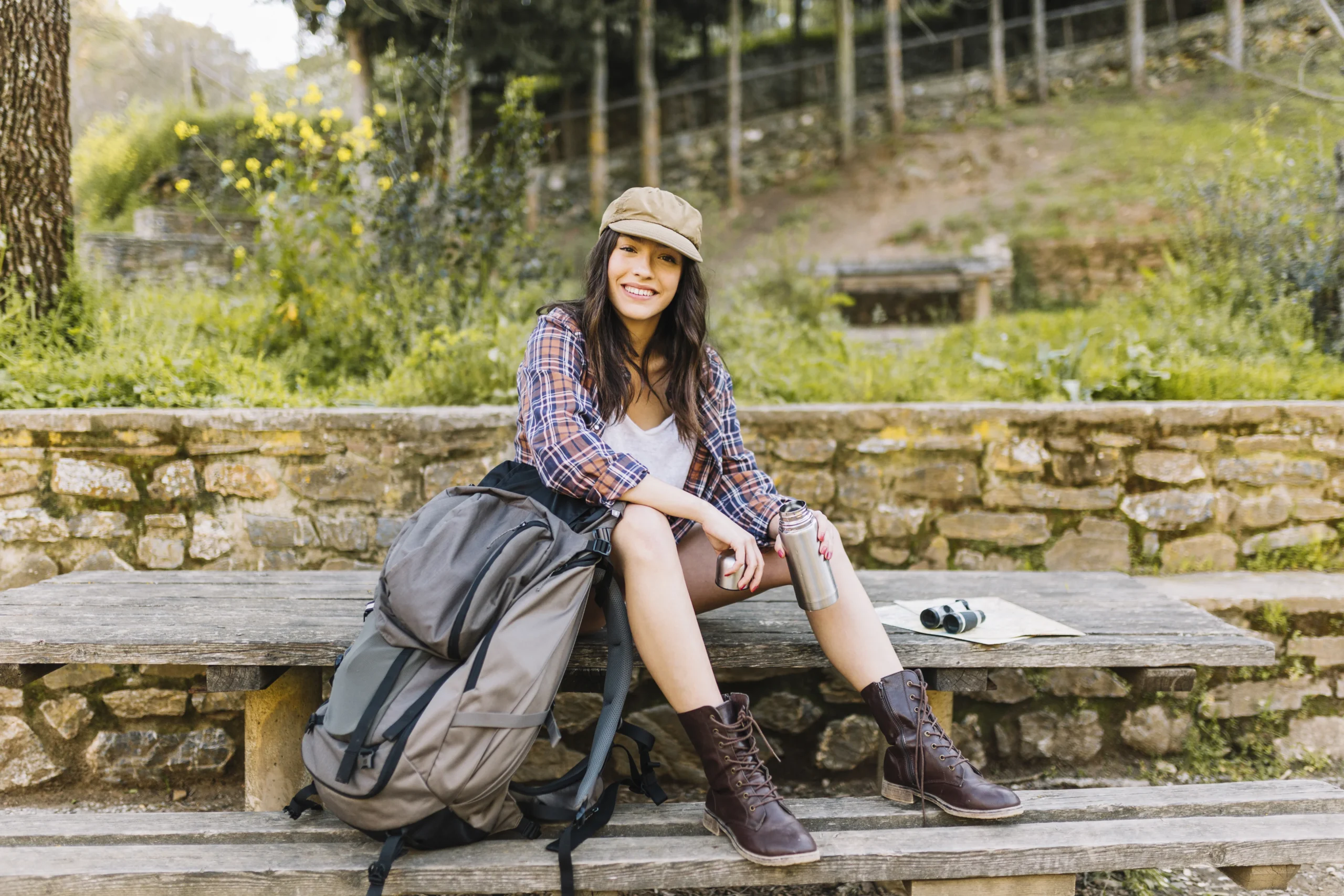
Here is the thing nobody mentions about backpacking: you carry every single item you wear. Every extra layer, every spare pair of pants, every just-in-case top is something your shoulders and hips feel at the end of the day. A day hiker can throw a few extra items in the car. A backpacker lives with the consequences of every choice for days or weeks, and that changes how you think about clothes completely.
Our Favorite Backpacking Outfits for Women
1. Black Tank Top, Black Hiking Shorts, Green Cap and Grey Hiking Backpack
Black tank top, black hiking shorts, green cap, grey hiking backpack.
The hot-weather worn outfit, and the lightest possible base. A tank and shorts weigh next to nothing and dry quickly after sweat or a river crossing. A cap handles the sun. Because the tank leaves your shoulders bare, check that the pack straps do not rub and put sunscreen on skin under them.
2. Black Zip-Up Jacket, Olive Green Cargo Pants, Black Cap and Trail Shoes
Black zip-up jacket, olive green cargo pants, black cap, trail shoes.
The easy, lightweight option for dry trips and well-marked trails. A zip-up jacket works as a mid-layer, and cargo pants carry small items so you do not need to stop and open the pack. Trail shoes are lighter than boots, so they save energy over long distances, though they offer less ankle support when your pack is heavy.
3. Beige Quarter-Zip Top, Taupe Cargo Pants, Beige Cap, Hiking Boots and Black Backpack
Beige quarter-zip top, taupe cargo pants, beige cap, hiking boots, black backpack.
A good all-rounder for a multi-day trip. A quarter-zip regulates temperature without removing a layer, and the earthy palette hides several days of dust. Hiking boots give support for rocky or uneven terrain when you carry a loaded pack. This is the outfit you could wear for day after day.
4. Black Hiking Jacket, Beige Wide-Leg Pants, Grey Sneakers and Black Backpack
Black hiking jacket, beige wide-leg pants, grey sneakers, black backpack.
The travel-backpacking version. Lightweight wide-leg pants are cool, comfortable and presentable in towns, and a hiking jacket handles rain and wind. Sneakers keep your shoe weight down when you move between cities, hostels and day trails. Choose quick-drying fabric, since laundry may be infrequent.
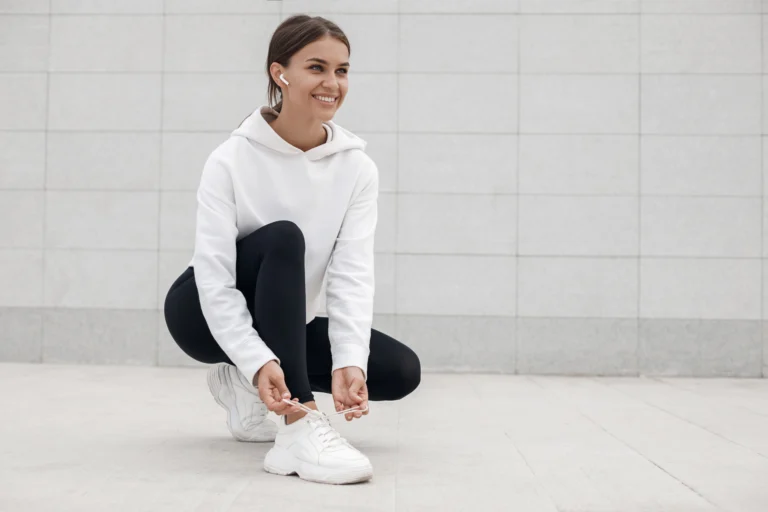
5. Pink Zip-Up Jacket, Black Leggings, White Socks and Hiking Shoes
Pink zip-up jacket, black leggings, white socks, hiking shoes.
Leggings are one of the most efficient items to take backpacking. They are light, compact, warm and double as sleepwear in a pinch. A zip-up jacket adds a layer, and the pink makes you easy to spot in a group. Choose a durable pair that will not snag on branches.
6. Black Long-Sleeve Top, Grey Leggings, Burgundy Beanie, Red Hiking Backpack and Brown Boots
Black long-sleeve top, grey leggings, burgundy beanie, red hiking backpack, brown boots.
The cool-morning outfit. A long-sleeve base layer and leggings take little space and keep you warm, and a beanie weighs almost nothing while holding heat where you lose it. The red backpack adds visibility. Wool or synthetic fabrics are best, since they stay warm and resist odor over several days.
7. Grey Zip-Up Jacket, Black Cargo Pants, Sunglasses and Hiking Shoes
Grey zip-up jacket, black cargo pants, sunglasses, hiking shoes.
A solid everyday outfit that works at altitude and in sun. Sunglasses protect your eyes from glare off rock, snow and water, which is an essential piece of kit above the tree line. Black cargo pants hide dirt, and a grey jacket works with almost anything. This is a simple look to rewear.
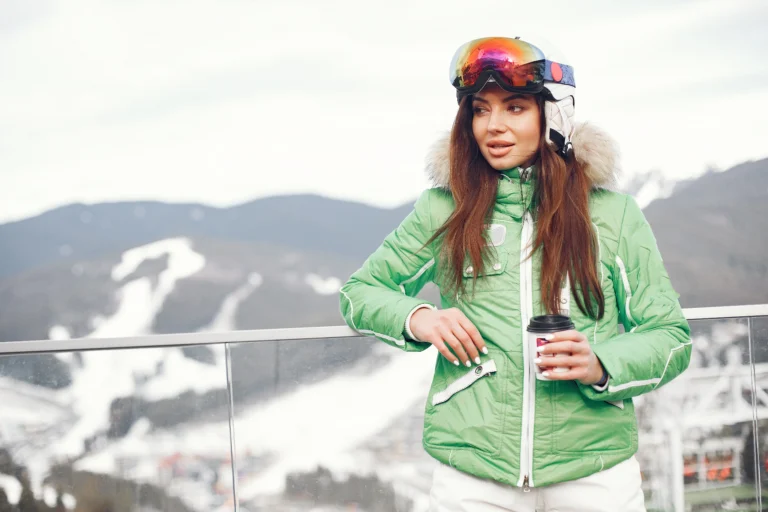
8. Cream Fleece Pullover, Yellow Puffer Vest, Olive Green Leggings and Hiking Boots
Cream fleece pullover, yellow puffer vest, olive green leggings, hiking boots.
Your camp and cold-weather layers. A fleece and a puffer vest are among the best warmth-for-weight pieces you can pack, and they compress small. The vest keeps your core warm without bulky sleeves. Wear them at camp in the evening, when you are sitting still and the temperature drops.
9. Green Oversized Sweatshirt, Black Leggings, Black Cap and White Sneakers
Green oversized sweatshirt, black leggings, black cap, white sneakers.
The rest-day outfit. A sweatshirt is comfortable for a day in town, a long bus ride or lounging at a hostel, but it is heavy and slow to dry, so it is rarely worth carrying on a trail trip. Keep it for travel-style backpacking where weight is less critical, or replace it with a lightweight fleece.
My Best Tips for Backpacking Outfits
01The Backpacking Palette
Black, olive, taupe, beige and grey hide dirt and sweat over several days. Add one bright piece, like a pink jacket or a red pack, for visibility and a touch of color. Pick colors that all go together so everything you carry mixes and matches.
02Your Three Groups
Worn: breathable top, shorts or pants, cap, shoes and socks that you can wear for days. Packed: a warm layer, a rain jacket, a spare pair of socks and a hat. Sleep: dry base layers that never touch the trail.
03Pack Light, Layer Smart
Instead of bringing more clothes, bring a system: a base layer, an insulating layer and a waterproof shell that work together. Many guides suggest keeping a loaded pack to roughly 20 percent of your body weight or less. Weigh your clothes, and leave out anything you will not use.
04Choose Fabrics You Can Rewear
Merino wool and good synthetics resist odor and dry quickly, so you can wear them for days between washes. Cotton is heavy, slow to dry and cold when wet. Spend your budget on base layers and socks.
05Make It Multi-Use
Choose items that do two jobs: leggings that are also sleepwear, a cap that is also sun cover, a fleece that is also a pillow. Fewer, more versatile items mean less weight and fewer decisions.
06Look After Your Feet
Your feet carry you and the pack. Choose broken-in boots or trail shoes with good support, take at least two pairs of wool or synthetic socks, and air your feet at breaks. Treat hot spots early with tape or plasters before they become blisters.
07Dry Layers Are Gold
Keep your sleep clothes and a spare layer in a waterproof bag, so you always have something dry. Change into them at camp and hang damp clothes to dry. A dry set of clothes makes cold nights and wet days far more bearable.
Copy-Paste Backpacking Outfit Template
✶ Worn top: Moisture-wicking or merino top, tank or quarter-zip.
✶ Worn bottom: Quick-dry shorts, cargo pants or durable leggings.
✶ Warm layer: Fleece or puffer vest that compresses small.
✶ Shell: Lightweight waterproof jacket.
✶ Head: Cap for sun, beanie for cold.
✶ Feet: Broken-in boots or trail shoes, plus two pairs of technical socks.
✶ Sleep: Dry base layers kept in a waterproof bag.
Carry less, wear it longer.
Backpacking Outfits for Women FAQ
What should I wear backpacking?
Moisture-wicking, quick-drying clothing in layers: a breathable base, a warm mid-layer such as fleece, and a waterproof shell. Add a hat, sun protection and supportive shoes or boots. Avoid cotton, which holds moisture and is slow to dry.
How many clothes should I pack for backpacking?
Fewer than you think. One outfit to wear, a spare pair of socks and underwear, a warm layer, a rain jacket and dry sleep clothes cover most trips. Choose items that mix and match and can be worn several days in a row.
Are leggings good for backpacking?
Yes. They are light, compact and warm, and they can double as sleepwear. Choose a durable pair in a quick-drying fabric, and add a lightweight shell for wind and rain.
Should I wear boots or trail shoes?
It depends on the terrain and the weight of your pack. Boots give more ankle support for rough terrain and heavy loads, while trail shoes are lighter and dry faster. Choose what feels best on your feet, and break them in before the trip.
How do I keep clothes dry while backpacking?
Pack dry layers in a waterproof bag or liner inside your pack, use a pack cover in rain, and hang wet items to dry at breaks and camp. Keep one set of clothes strictly for sleeping so you always have something dry.