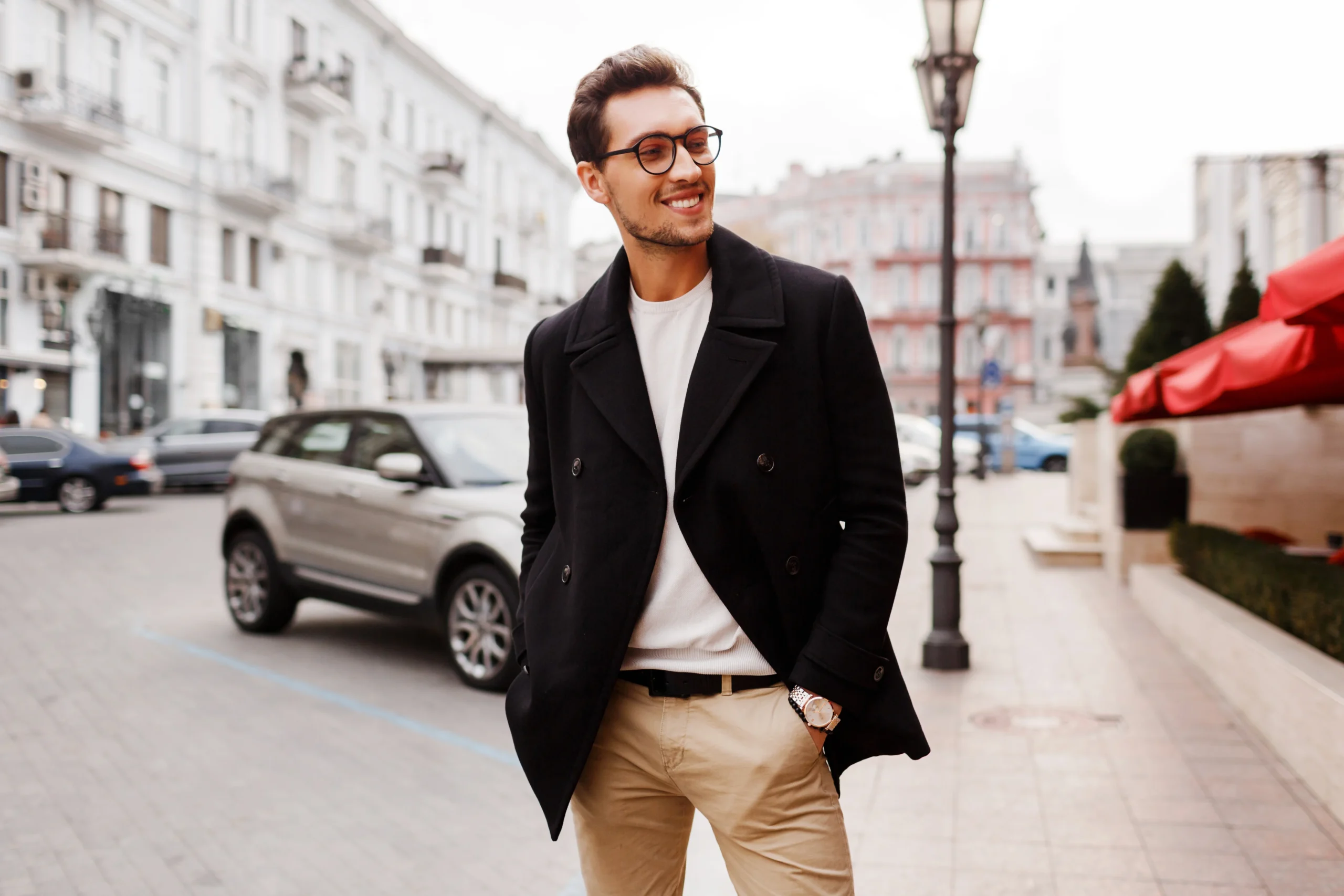
“Smart casual” is probably the most confusing dress code in existence. Not because it’s actually complicated – but because it sits in this deliberately vague middle ground where “smart” could mean a blazer or just a clean shirt, and “casual” could mean jeans or chinos or something you’d wear on a Sunday. The result is that a lot of men either over-dress (full blazer and trousers for a dinner that turns out to be a pub) or under-dress (a plain tee and joggers for something that required a bit more). Smart casual outfits for men that genuinely work are the ones that understand the actual brief – looking put-together and considered without tipping into formal, regardless of the specific context.
Seven looks that nail that balance. All of them work for the kind of occasions where “smart casual” is the brief – a dinner with people you want to impress, a creative workplace on a good day, a social event where you want to look like you thought about it without making it the whole personality.
Our Favorite Smart Casual Outfit Ideas for Men
The Knit That Does the Heavy Lifting
Navy oversized sweatshirt, baggy light-wash jeans, white sneakers. The navy sweatshirt is the piece doing the smart-casual work here – it’s clean, it has presence, and it gives the baggy jeans below it something considered to push against. Light-wash denim reads as casual, the navy reads as considered, and white sneakers land the whole thing in the right zone. This is the smart casual formula at its most effortless – three pieces, consistent palette, and you’re done.
The Texture Upgrade
Navy knit sweater, baggy straight jeans, white sneakers, beige cap. Swapping the sweatshirt for a knit sweater elevates this combination by a full notch without changing anything else about the formula. The ribbed or woven texture of a knit reads as more intentional than a flat sweatshirt, which moves the whole look further into smart casual territory. The beige cap is the one accessory that signals this is an outfit rather than a default outfit – a small detail, significant effect. Same palette, same jeans, meaningfully different result.
The Shacket Layer That Smart-Casuals Everything
Grey plaid flannel shacket, grey tee underneath, olive cargo trousers, white sneakers. A shacket – worn open as a structured outer layer – is one of the most useful pieces in smart casual dressing because it takes what’s underneath (a plain tee and cargo trousers) and elevates the whole thing by association. The plaid pattern adds visual texture, the tonal grey-on-grey creates a sophisticated layered quality, and the olive trousers below add just enough warmth to keep it from reading as flat. The kind of outfit that reads as smart casual from the other side of the room.
The Most Classic Smart Casual Formula
Olive military overshirt, white Henley underneath, khaki chinos, white sneakers. This is the textbook smart casual combination – a structured overshirt layered over a Henley with clean chinos. The overshirt provides the structure and intentionality that pushes it above casual. The Henley adds a more considered neckline than a plain tee. Khaki chinos are inherently more polished than jeans without requiring any additional formality. And white sneakers keep the whole thing from tipping into business casual territory. This combination works for practically every smart casual occasion there is.
The Linen Shirt Done Right
Brown linen shirt, cream baggy jeans, beige retro sneakers, canvas tote. Linen in a smart casual context is a very specific choice that works – it’s relaxed but it has a fabric quality that reads as considered rather than casual. Brown linen against cream jeans in a tonal earth palette is genuinely sophisticated. The retro sneaker in a warm beige tone is doing serious colour-story work here, tying the browns and creams together in a way a white sneaker wouldn’t. This is smart casual for someone who has developed a clear personal style rather than just assembling pieces.
The Tonal Earth Palette
Cream oversized sweatshirt, olive cargo trousers, grey Nike Air Max. Tonal dressing is one of the fastest shortcuts to looking smart casual without any additional pieces or layers. Cream and olive sit in the same earthy warm palette, which means the whole outfit reads as deliberate rather than default. The grey Air Max bridges the two tones and adds a specific sneaker choice that signals the whole outfit was considered as a system rather than assembled piece by piece. Simple in theory, looks considerably more complex in practice.
The Chunky Knit and Cargo Combination
Grey chunky knit sweater, white tee underneath (collar visible), navy cargo trousers, white sneakers. The chunky knit doing the smart work, the cargo trousers doing the casual work, and the white tee visible at the collar doing the layering work that makes the whole thing feel considered. The navy-grey-white palette is clean and cohesive. This is a great cold-weather smart casual combination – warm, textured, and polished in a way that a thin sweater and slim jeans isn’t. The visible collar is genuinely the detail that makes it.
Find more Smart Casual Outfits for Men on our Pinterest
My Best Tips for Smart Casual Outfits for Men
How to consistently land in the right zone between casual and polished – and never be over or under-dressed for a smart casual occasion again.
Smart casual isn’t a specific dress code so much as a balance – and once you understand how that balance works, it becomes a very reliable zone to dress in. The formula is always: one piece that elevates, one piece that relaxes, and a palette that ties them together. Here’s how to apply that consistently.
Understand What “Smart Casual” Actually Means
Smart casual is a balance rather than a category. Every outfit needs something doing the “smart” work and something doing the “casual” work. Here’s what each side of that equation looks like in practice:
- → The “smart” elements – a knit sweater, a structured overshirt or shacket, a collared linen shirt, chinos, a quality fabric with texture. These are the pieces that lift the look above purely casual.
- → The “casual” elements – jeans (even well-fitting ones), cargo trousers, sneakers, a sweatshirt, a tee visible underneath. These are what keep it from becoming business casual or formal.
- → The balance – you need both. All smart elements and it’s not smart casual anymore, it’s just smart. All casual elements and it’s just casual. The tension between them is the whole point.
- → When in doubt, add one smart element to an outfit that feels too casual, or remove one formal element from an outfit that feels too dressed. That single swap usually lands you exactly where you need to be.
Your Three Smart Casual Formulas
Three reliable approaches that cover the full smart casual range:
The Layered Formula (most reliable)
A structured outer layer (overshirt, shacket, linen shirt) + a simple base underneath (Henley or tee) + chinos or clean jeans + white sneakers or loafers. The layer does the smart-casual heavy lifting. Everything underneath can be completely simple.
The Elevated Casual Formula
A quality knit sweater or textured top + well-fitting jeans or cargo trousers + a specific sneaker in a tonal color rather than just the default white. No layer required – the texture of the knit and the intentional shoe choice do the smart-casual work.
The Tonal Palette Formula
Two or three pieces in the same color family (cream + olive + beige, or navy + grey + white) where the cohesion of the palette itself signals intention. The tonal approach makes simple pieces read as a deliberate outfit rather than random pieces that happen to be on your body.
The Smart Casual Color Palette
Smart casual for men lives in a warm, considered neutral palette – here’s what works and why:
- → Navy – the smartest casual color there is. Put a man in navy and the outfit immediately reads as more considered than the same silhouette in grey or black.
- → Olive and khaki – the most useful trouser tones for smart casual. More interesting than grey or black, inherently more polished-looking than denim.
- → Cream and off-white – warmer than white, works beautifully in knitwear and linen. The most sophisticated casual base color for tops.
- → Warm brown and tan – for linen shirts, shackets, and accessories. The warmest neutral that adds depth without going formal.
- → Grey – in every shade. Works as both a base color and a layering color, consistently reads as considered when combined with the warmer tones above.
Layering Is the Shortcut to Smart Casual
An outfit with a considered layer almost always reads as smart casual regardless of what’s underneath. Here’s the specific layering approach that works best:
- → An overshirt or shacket worn open – the most reliable smart casual layering move. The structured outer piece elevates the tee or Henley underneath immediately. Keep it open; a buttoned overshirt reads as just a shirt.
- → A tee collar visible beneath a knit – the low-effort layering detail that makes any knitwear combination read as more considered. A white crew-neck tee peeking at the collar of a chunky knit is a classic for a reason.
- → A Henley instead of a plain tee under any layer – the curved button placket of a Henley adds visual interest that elevates the whole layered look
- → Keep the layer and the base in the same color family – a grey flannel over a grey tee, or an olive overshirt over a white Henley. Tonal layering looks more sophisticated than contrasting layers.
Shoes That Land in the Smart Casual Zone
The shoe is where smart casual most often tips too far in one direction or the other. Here’s the guide for staying in the right zone:
- → Clean white leather sneakers – the most versatile smart casual shoe. Works across all formality levels within the smart casual spectrum.
- → Retro runners in a tonal warm color – beige, tan, or grey sneakers that match the outfit’s palette. Reads as more considered than white and works especially well with tonal outfits.
- → Loafers – move the whole outfit a notch higher in the smart casual register. A great option when the rest of the outfit is on the more relaxed side.
- → Chunky sneakers (Air Max, New Balance 550) – work well with the bulkier, more textured smart casual looks like chunky knits and cargo trousers. The visual weight balances the outfit.
- → Avoid: obviously athletic or technical running shoes, trainers that are visibly worn out, anything that reads as purely functional rather than chosen
The Trouser Hierarchy for Smart Casual
Bottom half choices dramatically shift where your outfit lands on the smart-to-casual spectrum. Here’s the hierarchy from most casual to most smart within the smart casual zone:
- → Baggy jeans – the most casual option within smart casual. Needs a more considered top to lift the overall look – a knit, a linen shirt, a structured layer.
- → Straight or slim jeans in a clean wash – mid-range in the hierarchy. Pairs well with most smart casual tops without requiring as much elevation.
- → Cargo trousers in olive or navy – slightly more structured than jeans while remaining casual. Works particularly well with knitwear and shacket layering.
- → Chinos (khaki, beige, or olive) – the most polished trouser within smart casual. Allows the top to be simpler because the trouser is doing more of the smart work.
Common Smart Casual Mistakes and How to Fix Them
A few specific things that take an outfit out of the smart casual zone – and the single swap that fixes each one:
- → Too casual: plain white tee + jeans + running shoes. Fix: swap the running shoe for a clean white sneaker or loafer, and add a layer or swap the tee for a Henley.
- → Too formal: dress shirt + chinos + leather Oxfords. Fix: swap the dress shirt for a linen shirt or quality tee, and the Oxfords for white sneakers or loafers.
- → No cohesion: mismatched colors and tones with no consistent palette. Fix: pick two tones and build around them. Navy and cream. Olive and grey. Cream and brown. Stick to those two until you leave the house.
- → Good pieces, bad fit: well-chosen items that don’t fit properly. Fix: the shoulder seam of anything you’re wearing should sit at the edge of your shoulder. If it doesn’t, the piece isn’t right or needs a tailor.
The cheat code: An olive military overshirt worn open over a white Henley, with khaki chinos and clean white sneakers, is the smart casual outfit that works for almost every smart casual occasion there is. The overshirt is doing the smart work, the Henley is doing the casual work, and the palette of olive, white, and khaki is consistently cohesive. Learn this combination first. It is genuinely the blueprint for how smart casual is supposed to work.
Copy-Paste Smart Casual Outfit Template for Men
- ✦ One “smart” piece – a knit sweater, overshirt, shacket, or linen shirt
- ✦ One “casual” piece – jeans, cargo trousers, or chinos in a clean neutral
- ✦ A simple base if layering – a Henley or clean tee with a visible collar or hem
- ✦ A shoe that’s clearly a choice – clean white sneakers, retro runners in a tonal color, or loafers
- ✦ A palette of two or three tones maximum – all in the same warm neutral family
- One piece elevates. One piece relaxes. The palette ties it together. That’s smart casual.
Frequently Asked Questions
What does smart casual mean for men?
Smart casual is a balance rather than a specific dress code – every outfit needs something doing the “smart” work (a knit sweater, a structured overshirt, a quality linen shirt, chinos) and something doing the “casual” work (jeans, cargo trousers, sneakers, a relaxed fit). The tension between those two elements is what lands you in the smart casual zone. Too much smart and it becomes business casual. Too much casual and it’s just casual. The balance is the point.
What are the best smart casual outfits for men?
An olive overshirt open over a white Henley with khaki chinos and white sneakers is probably the most reliable smart casual combination going – the layered structure does all the work. A navy knit sweater over baggy straight jeans with white sneakers and a beige cap works for a more relaxed interpretation. A grey chunky knit over a visible white tee with navy cargo trousers and white sneakers is the best cold-weather option. All three share the same logic: one elevated piece, one casual piece, and a cohesive palette.
What trousers work best for smart casual men’s outfits?
Chinos in khaki, beige, or olive are the most reliably smart casual trouser – they’re inherently more polished than jeans without being formal. Cargo trousers in olive or navy sit just below chinos in the hierarchy and work particularly well with knitwear. Well-fitting straight or slim jeans in a clean wash work when the top half is doing more of the smart-casual heavy lifting. The general rule is: the more casual the trouser, the more considered the top needs to be.
Can you wear sneakers for smart casual?
Yes – and clean white leather sneakers are probably the most versatile smart casual shoe there is. The key distinction is between a sneaker that reads as a deliberate style choice and one that reads as whatever was by the door. Clean white leather sneakers, retro runners in a tonal color (beige New Balance, grey Samba), and loafers all work within smart casual. Obviously athletic or technical running shoes, and anything visibly worn out, push the outfit back into pure casual territory.
How do you dress smart casual without a blazer?
Easily – a blazer is not required for smart casual. An overshirt or shacket worn open over a simple base provides the same structural, elevated quality that a blazer does without the formality. A quality knit sweater in a textured fabric (chunky knit, ribbed wool) elevates an outfit above casual without any additional layer. A linen shirt in a warm color like olive or brown reads as considered and polished while remaining completely relaxed. The layering and fabric quality do the work that a blazer would otherwise do.