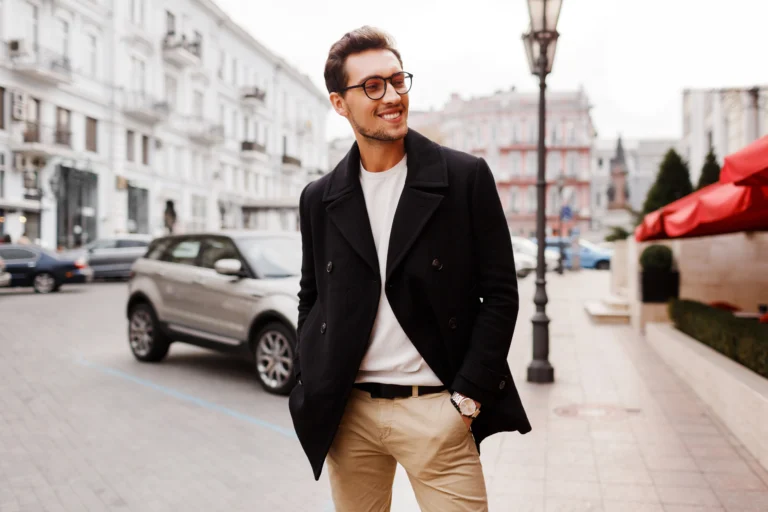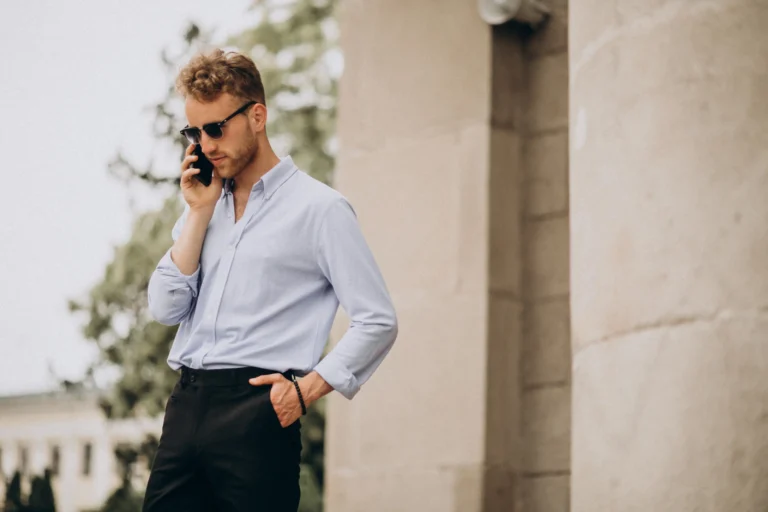
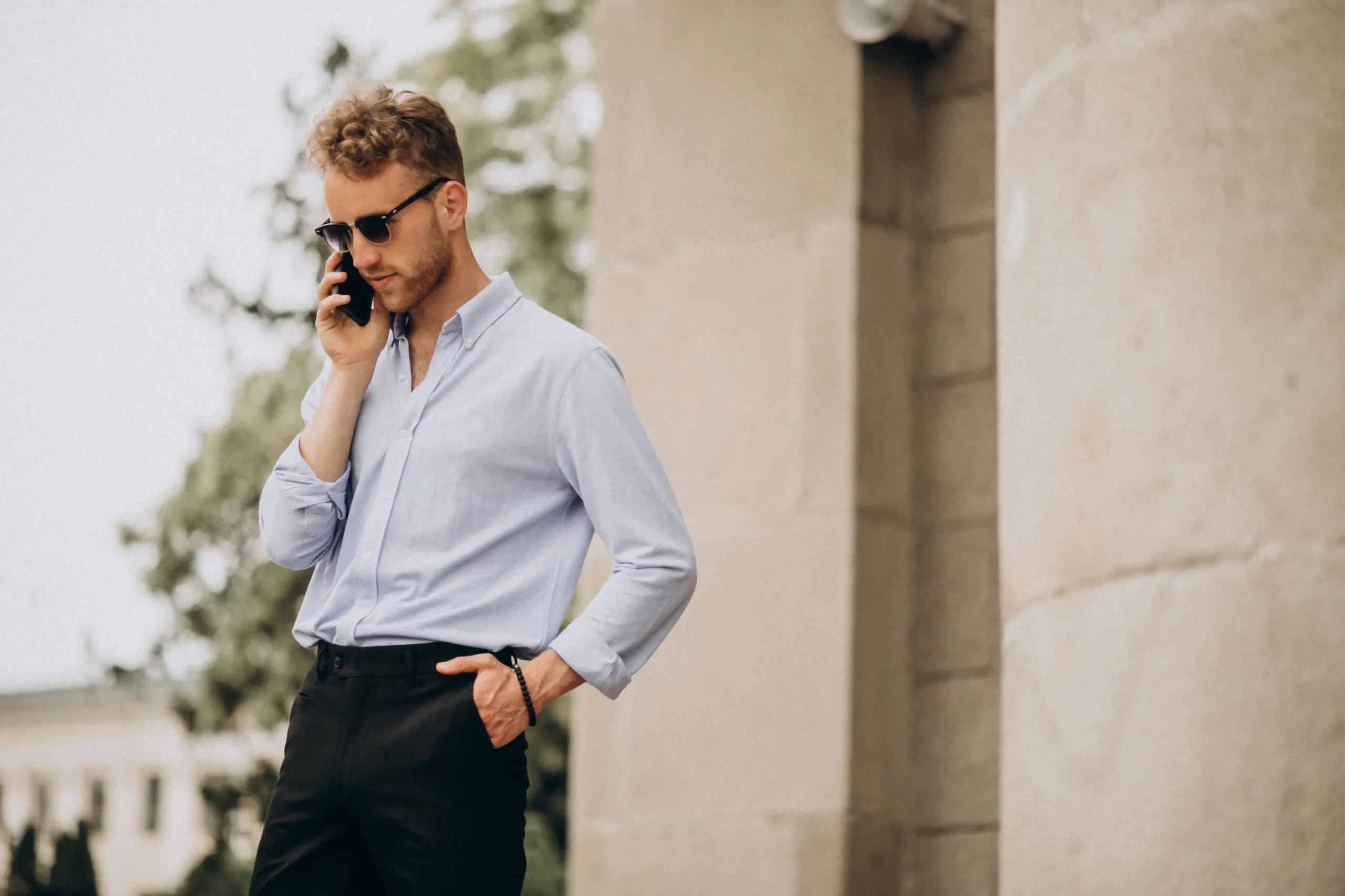
Business casual is the dress code that theoretically gives men more freedom than a formal suit and tie requirement – but in practice, a lot of guys find it harder to navigate, not easier. Because there’s a right and wrong way to do it, the line between “appropriately business casual” and “should have made more of an effort” is genuinely easy to miss, and the consequences of getting it wrong in a professional setting are more real than they might be elsewhere. Business casual outfits for men that actually work sit in a specific zone – polished enough to signal that you take your work seriously, relaxed enough to not look like you’re wearing a costume in your own office.
Eight looks that cover the full range of business casual occasions – from the polished blazer combinations for important days to the more relaxed polo-and-chinos formulas for everyday office life. Here’s what actually works.
Our Favorite Business Casual Outfit Ideas for Men
The Dress Shirt and Slim Trouser Classic
Blue striped dress shirt, navy slim trousers, brown leather Oxfords, tan belt. This is the most traditional business casual combination on the list – and it works because every element is doing exactly what it should. The striped dress shirt adds enough visual interest to avoid reading as a plain formal shirt. Navy slim trousers are the most professional trouser color outside of charcoal. Brown leather Oxfords and a tan belt provide the warm accessories that stop it from looking too corporate. This is the outfit for a day that involves a meeting with someone important.
The Sport Blazer and Linen Shirt
Navy sport blazer, light blue linen shirt, cream chinos, brown woven belt. A sport blazer (one that’s clearly not part of a suit – often in a texture, a pattern, or a fabric like linen or tweed) over a linen shirt and cream chinos is a genuinely excellent business casual combination. The sport blazer gives you the structure and authority of a jacket without the formality of a matched suit. The linen shirt underneath adds a slightly relaxed texture that works well with the cream chinos. The brown woven belt ties the warm palette together. This reads as completely professional while also clearly being a person with a sense of his own style.
The Knit Polo and Check Trouser Combination
Burgundy knit polo, grey micro-check trousers, white sneakers. The knit polo is the business casual piece that most men underuse – it has the collar that signals professionalism without any of the stiffness of a dress shirt, and in a rich color like burgundy it reads as genuinely considered rather than just compliant. The micro-check trouser is the interesting choice here – the subtle pattern makes it more distinctive than plain grey while remaining entirely appropriate for a business environment. White sneakers keep it from getting too stuffy. For creative or more relaxed business casual offices, this is an excellent everyday formula.
The Monochrome Dark Combination
Black slim dress shirt, dark charcoal trousers, brown leather Oxfords. A dark tonal combination – black dress shirt against charcoal trousers – reads as effortlessly polished in a business casual context. It’s confident without being flashy, and the brown leather Oxfords add the one warm element that stops it from reading as severe. The key to this combination is fit – a slim dress shirt and slim trousers in dark tones show every fit issue immediately. Get both pieces right and this is one of the sharpest business casual looks there is.
The White Shirt and Chinos Benchmark
White dress shirt, beige slim chinos, brown suede loafers, brown belt. This is the business casual benchmark – the combination that works in every office, for every meeting, without a single second of doubt about whether it’s appropriate. A clean white dress shirt with slim chinos and brown leather accessories is impossible to get wrong. Suede loafers in particular add a relaxed quality that keeps it firmly in business casual territory rather than formal. If you could only own one business casual outfit, this would be the one.
The Textured Blazer with Monk Loafers
Grey textured blazer, striped open-collar shirt, dark charcoal trousers, monk loafers. The textured blazer is doing something a regular smooth blazer doesn’t – the surface texture adds visual depth that makes the whole outfit feel more deliberately styled. An open-collar striped shirt underneath keeps it from reading as too formal. Charcoal trousers provide the professional grounding. And monk strap loafers – the buckled version that sits between a dress shoe and a loafer – are the specific shoe choice that adds genuine distinction to the whole combination. This is business casual for someone who has figured out exactly what they’re doing.
The Grey Suit Set with a Tee
Charcoal grey blazer, white tee, matching grey trousers, white sneakers. The matched grey blazer and trousers with a white tee and white sneakers is a very specific modern business casual move – it takes the structure of a suit and replaces every formal element (dress shirt, formal shoes) with something more relaxed. The result is surprisingly polished. The white tee needs to be a genuinely good one – fitted, quality fabric, no distressing or print. And the sneakers need to be actually clean. When both are right, this outfit reads as intentional, confident, and completely appropriate for most business casual environments.
The Olive Blazer and Black Combination
Olive green blazer, black sweater, black slim trousers, Chelsea boots. An olive blazer over an all-black base is one of the most interesting business casual combinations in this roundup – the warm green against the clean black creates a contrast that reads as genuinely stylish without departing from professional territory. The black sweater keeps the chest area clean and removes the need for a shirt entirely. Chelsea boots are the right shoe here – they add structure and a slightly elevated quality that matches the jacket without being too formal. This is the outfit for someone who wants to look good at work and doesn’t want to blend in with the beige-and-navy crowd.
Find more Business Casual Outfits for Men on our Pinterest
My Best Tips for Business Casual Outfits for Men
How to dress professionally without looking like you’re trying too hard or not hard enough – and build a rotation that requires no thought on a Monday morning.
Business casual done well is less about following specific rules and more about understanding what “professional but not formal” looks like in your specific environment. The guy who consistently nails it is usually working from three or four reliable combinations he trusts completely. Here’s how to build those combinations and the principles behind why they work.
Know the Formality Levels Within Business Casual
Business casual isn’t one thing – it exists on a spectrum from “barely above smart casual” to “just below business professional.” Understanding where your office and your specific day lands helps you dress appropriately every time:
- → High business casual – for client meetings, important presentations, visiting senior leadership. A sport blazer or structured jacket + dress shirt or quality knit + tailored trousers + Oxfords or loafers. No sneakers.
- → Standard business casual – regular office days, internal meetings. A knit polo or dress shirt + slim chinos or tailored trousers + loafers or clean leather sneakers. Optional blazer.
- → Relaxed business casual – creative offices, Fridays, WFH-adjacent days. Quality tee under a blazer + grey trousers + white sneakers. Still clearly professional, just less formal.
- → When unsure about a day’s formality level, dress one notch higher than you think you need to. It’s significantly easier to appear slightly overdressed than underdressed in a professional environment.
Your Three Business Casual Formulas
Three combinations that cover every business casual occasion – from a client visit to a regular Tuesday:
The Meeting Formula
Blazer or sport jacket + dress shirt or knit polo + slim tailored trousers + leather Oxfords or loafers + leather belt. For any day involving clients, presentations, or senior leadership. The blazer is non-negotiable here.
The Everyday Formula
Knit polo or clean dress shirt + slim chinos or tailored trousers + loafers or suede shoes + leather belt. The workhorse business casual outfit for regular office days. Reliable, professional, comfortable enough for a full day.
The Relaxed Friday Formula
A grey or navy blazer + quality white tee + matched trousers + clean white sneakers or suede loafers. The most modern business casual formula – still completely professional, more relaxed in feel. Only works when the tee is genuinely quality and the sneakers are actually clean.
The Blazer Is Your Most Important Investment
More than any other single piece, a well-fitted blazer transforms a business casual outfit. Here’s how to choose and use it correctly:
- → The shoulder seam must sit exactly at the edge of your shoulder – this is the one fit point that cannot be tailored and determines more about how the jacket looks than anything else.
- → Navy blazer first – the most versatile business casual blazer. Works with cream chinos, grey trousers, black trousers, white shirts, blue shirts, knit polos. Buy this one before any other blazer color.
- → Grey as your second blazer – charcoal or mid-grey works across the same range. Slightly more formal than navy, equally versatile.
- → A sport blazer (texture, pattern, or non-suit fabric) reads as more intentionally business casual than a matched suit jacket. It signals style rather than just compliance.
- → Keep the blazer pressed and in good condition. A wrinkled blazer undermines the professional signal entirely.
The Business Casual Color Palette
Business casual has a more limited color palette than casual dressing – and that restriction is actually useful. Here’s what works and why:
- → Navy – the single most useful business casual color. Wear it as a blazer, a trouser, or a shirt and it always reads as professional and considered.
- → Charcoal and grey – for trousers and blazers. More authoritative than black, more versatile than navy. The charcoal trouser is the most professional casual trouser there is.
- → White and light blue – for shirts. Clean, classic, works with every trouser and blazer combination in the professional palette.
- → Brown and tan leather – for shoes, belts, and accessories. Consistently more elegant against the professional palette than black accessories, which can read as too harsh.
- → Accent colors (burgundy, olive, cream) – used as one piece maximum. A burgundy knit polo, an olive blazer, cream chinos. One warm accent, everything else in the professional neutral family.
Business Casual Shoes – The Hierarchy
The shoe is where business casual most commonly tips too casual – and where the right choice adds genuine distinction. Here’s the hierarchy from most to least formal within business casual:
- → Brown leather Oxfords – the most formal option within business casual. For high business casual days and client-facing situations. Cap-toe or plain-toe are the most versatile.
- → Monk strap loafers – the step between an Oxford and a regular loafer. Adds genuine distinction, works particularly well with textured or interesting blazers.
- → Brown suede loafers – the most versatile everyday business casual shoe. Relaxed enough to be comfortable all day, polished enough for most professional contexts.
- → Chelsea boots – for more creative or fashion-forward environments. Adds a sharper, more editorial quality to a blazer-and-trouser combination.
- → Clean white leather sneakers – the most casual option, works only in genuinely relaxed business casual environments and only with an otherwise very polished outfit. Not appropriate for client meetings in most sectors.
The Belt – The Professional Detail Most Men Overlook
In a business casual context, the belt is more important than in casual dressing because the overall look is more considered and every detail is more visible. Here’s how to use it right:
- → The belt should match the shoe leather – brown belt with brown shoes, tan belt with tan shoes. This is the one rule in business dressing that’s still genuinely worth following.
- → A woven leather belt (like the brown woven belt in pin 2) adds texture and a slightly more relaxed quality that works well in business casual contexts – more considered than a plain leather strip.
- → Keep belts in good condition – cracked leather or a worn buckle undermines the professional appearance of an otherwise good outfit
- → If wearing a blazer that stays buttoned, the belt is largely invisible – save your best belt for the days when your jacket comes off
Building a Business Casual Capsule Wardrobe
You don’t need a lot of clothes to cover a full working week in business casual. You need the right pieces that mix together reliably. Here’s the actual list:
- → 1 navy blazer – the foundation piece that makes everything else work harder
- → 1 grey or charcoal blazer – your second blazer for variety and for higher-formality days
- → 2 dress shirts – one white, one blue or striped
- → 2 knit polos – one in a neutral (navy, grey), one in an accent (burgundy, olive)
- → 2 pairs of trousers – one charcoal slim, one navy or cream chino
- → Brown suede loafers and brown leather Oxfords – these two shoes cover every business casual occasion
- → 1 tan or brown leather belt – matches both shoe tones
- → Everything mixes with everything. That’s the whole wardrobe for a full working week.
The cheat code: A white dress shirt with slim beige chinos, brown suede loafers, and a tan leather belt is the business casual outfit that works in every office, for every occasion within the business casual spectrum, without a single question about whether it’s appropriate. Learn this combination first. It is the benchmark from which everything else in this wardrobe is calibrated. If something looks more or less formal than this – that’s your guide to whether it’s right for the day.
Copy-Paste Business Casual Outfit Template for Men
- ✦ A blazer or sport jacket – navy or grey, well-fitted at the shoulder
- ✦ A dress shirt, knit polo, or quality tee underneath
- ✦ Slim chinos or tailored trousers in charcoal, navy, or beige
- ✦ Brown leather Oxfords for important days, brown suede loafers for regular days
- ✦ A brown leather belt that matches the shoe
- ✦ A watch – the one finishing detail that reads as professional in every context
- Polished without being formal. Relaxed without being casual. That’s business casual done right.
Frequently Asked Questions
What counts as business casual for men?
Business casual sits between smart casual and business professional – it’s more polished than jeans-and-a-tee but less formal than a suit and tie. For men, this means a blazer or sport jacket is appropriate but optional depending on the day, dress shirts and knit polos are standard, slim chinos or tailored trousers replace jeans for most occasions, and leather shoes (Oxfords or loafers) are the expected footwear. Sneakers can work in genuinely relaxed business casual environments, but only clean leather ones paired with an otherwise very polished outfit.
What is the best business casual outfit for a man?
A white dress shirt with slim beige chinos, brown suede loafers, and a tan belt is the most universally appropriate business casual combination – it works in every office, for every occasion within the business casual spectrum, without any question about whether it’s right. For a higher-formality day, add a navy blazer. For a more relaxed day, swap the dress shirt for a knit polo. That one core outfit in a few variations covers most of a working week.
Can men wear sneakers for business casual?
In genuinely relaxed business casual environments – creative industries, tech companies, offices that lean smart casual – yes. Clean white leather sneakers paired with a blazer, quality tee or shirt, and slim grey trousers can absolutely work. The key words are clean leather and genuinely relaxed environment. Athletic shoes, running trainers, or visibly worn-out sneakers are not business casual in any environment. And for client meetings or high-formality business occasions, loafers or Oxfords are always the safer and more appropriate choice.
What trousers are best for business casual?
Slim tailored trousers in charcoal or navy are the most professional option and work across the full range of business casual formality. Slim chinos in beige or khaki are the most versatile everyday business casual trouser – they’re less formal than tailored trousers but more polished than jeans. Micro-check or subtle pattern trousers add distinction and show style awareness when everything else is simple. Avoid jeans unless your office is genuinely at the most relaxed end of the business casual spectrum.
How do you make a business casual outfit look stylish rather than just compliant?
Three moves that consistently make the difference: a sport blazer in a texture or pattern rather than a plain smooth fabric, one accent color in an otherwise neutral outfit (a burgundy knit polo, an olive blazer, cream chinos instead of beige), and a shoe that goes one step beyond the expected (monk strap loafers instead of regular loafers, Chelsea boots instead of Oxfords). The goal is looking like a man who happens to dress well, not a man who looked up what business casual means and wore the first result. Those moves land you in the first category.